
Practicing a simple meditation for busy people becomes far more achievable when mindfulness is presented as a gentle, secular and deeply accessible skill rather than a complex spiritual practice or a time-intensive ritual that demands silence, special equipment or long periods of uninterrupted focus, especially for busy professionals who often experience constant mental noise, multiple responsibilities stacked on top of each other, and schedules shaped by meetings, deadlines, messages and never-ending notifications that fragment attention before the day even begins.
Many beginners assume meditation requires sitting perfectly still, clearing the mind completely or having large pockets of availability; however, mindfulness becomes truly transformative when it is reframed as a short, breathable pause in your day that helps you return to yourself, reconnect with your senses, reset your attention and soften the strain created by modern busyness, without trying to master anything advanced or mystical, and without needing to wait for the “right moment” that never arrives.
This expanded and detailed guide offers a simple meditation for busy people in the form of a clear 5 minute meditation script, posture suggestions that suit different bodies and environments, timer options that make practice feel manageable, beginner mindfulness concepts that reduce confusion, focus practice tips to help wandering thoughts feel less frustrating, breathing guidance that calms the nervous system gently, common questions answered in plain language and troubleshooting advice for moments when meditation feels uncomfortable, difficult or overwhelming — all in a warm, secular and step-by-step style designed for real life.
By the end of this guide, you will have a meditation method that fits into your mornings, your breaks, your commute, your evenings or any transition moment, making it possible to use mindfulness as a grounding anchor rather than another item on the to-do list, and helping you practice presence in the smallest, simplest and most humane way possible.
Simple Meditation for Busy People: Why Short Practice Works
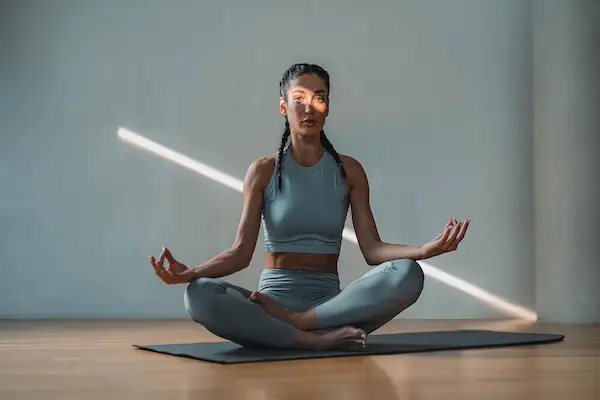
Short meditation sessions work surprisingly well for busy people because the mind adapts quickly to small doses of focus practice, and the nervous system responds within seconds to breathing exercises, gentle grounding and single-object attention, meaning that even a five-minute meditation can shift you out of scattered urgency and into steadiness, clarity and emotional balance.
Mindfulness is not about clearing the mind completely — the brain will always produce thoughts — but about noticing mental activity with less pressure and more curiosity, giving you a chance to interrupt stress spirals, pause autopilot reactions, improve your quality of attention and create micro-moments of relief throughout the day.
Short practices offer several benefits that long ones do not, especially for beginners:
- They feel doable even on the busiest days.
- They lower the psychological barrier to starting.
- They reduce guilt around inconsistency.
- They build long-term habit formation through small repetition.
- They teach the mind to reset without needing to schedule special time.
These advantages make quick mindfulness an ideal entry point for busy professionals who need grounding but cannot make space for lengthy meditation sessions.
How to Set Up Your Space: Simple and Flexible Posture Tips
Preparing your body and environment before beginning a simple meditation for busy people helps reduce physical discomfort and mental distraction, creating a safe baseline for beginners who are not yet familiar with posture adjustments, breathing awareness or eye relaxation.
Posture Basics (Secular and Comfortable)
- Choose a seated position that feels stable — a chair, couch, edge of the bed, park bench or even your car (parked).
- Let your spine grow long without forcing it straight; think “upright but soft.”
- Relax your shoulders downward and slightly back.
- Place your hands gently on your lap or thighs.
- Allow your jaw to soften and unclench, letting your tongue rest naturally.
- Keep your gaze lowered or close your eyes lightly if that feels safer.
If Sitting Is Uncomfortable
- Lean against the back of a chair for support.
- Sit on a cushion to elevate your hips.
- Meditate while lying down with knees bent (avoid falling asleep by keeping breathing active).
- Try standing meditation with feet hip-width apart.
If You Are in Public or at Work
- Meditate at your desk with eyes open.
- Use a bathroom stall for a brief breathing pause.
- Meditate during a commute (if not driving).
- Use hallway or outdoor seating for privacy.
Timer Options for a Gentle Meditation Experience
Choosing a timer helps you relax into meditation without worrying about the passing minutes, and offers structure for beginners trying to build a consistent practice without feeling overwhelmed or pressured.
Simple Timing Approaches
- 5 Minute Timer: ideal for beginners needing a quick reset.
- 3 Minute Timer: perfect for transition moments or emotional grounding.
- 10 Minute Timer: good for slightly deeper focus practice.
Timer Strategies for Busy People
- Use a silent vibration-only timer if meditating in public.
- Use a gentle chime that signals start and end without startling you.
- Choose a consistent meditation duration for routine formation.
- Start with shorter durations and increase slowly over weeks.
Timers make meditation feel contained and safe, reducing the mental resistance beginners often experience.
Simple Meditation for Busy People: Step-by-Step 5 Minute Practice
Below is a complete meditation script written in a slow, gentle and secular tone so busy beginners can follow it easily; use it as an internal guide or read it aloud and record it as personal audio.
5 Minute Meditation Script
- Begin by finding a comfortable seated position and letting your hands rest naturally.
- Take a slow inhale through your nose, letting the breath fill your body gently, and release the air through your mouth with a long, unhurried exhale that signals to your body that it can soften for a moment.
- Allow your eyes to soften or close, keeping your attention lightly anchored in the sensations of breathing — the coolness of air coming in, the warmth of air leaving, the subtle rise and fall of your chest or belly.
- Notice any thoughts drifting through your mind; acknowledge them briefly as mental events rather than instructions you must obey, and let them move along without needing to push them away.
- Bring your awareness gently back to your breath each time your mind wanders, using the return itself as the meditation rather than seeing distraction as a problem.
- Scan your body slowly from shoulders to hips to legs, releasing tension where you find it, while keeping your breath steady and calm.
- Take one deeper inhale, hold for one gentle moment and release slowly, grounding yourself and preparing to transition back into your day.
- Open your eyes if they were closed, notice how your body feels now compared to five minutes ago and allow yourself to move on with steadiness and clarity.
This structured meditation supports consistency, teaches focus practice basics and builds beginner mindfulness skills without requiring long sessions or advanced techniques.
Breathing Techniques for Busy Beginners
Breathing forms the foundation of meditation, and because breath influences the nervous system directly, learning one or two breathing methods can significantly enhance your ability to use quick mindfulness breaks effectively throughout the day.
Calming Breathing Methods
- 4–6 breathing: inhale for four counts, exhale for six counts.
- Box breathing: inhale four, hold four, exhale four, hold four.
- Three deep sighs: inhale, exhale fully, repeat twice.
- Hand-on-chest breathing: place a palm over your heart and breathe into the warmth.
When to Use These Breathing Methods
- Before starting your workday to ease tension.
- During a stressful moment to regulate your emotions.
- Between tasks to reset your attention.
- Before sleep to reduce restlessness.
- During commuting (only if you’re not driving).
Beginner Mindfulness Concepts Explained Simply
Understanding certain beginner mindfulness concepts helps reduce confusion and frustration that many new meditators experience when they notice how busy their minds feel.
Key Beginner Concepts
- Meditation is noticing, not emptying: thoughts will always arise.
- Return is the practice: the moment you come back to the breath is the moment you strengthen mindfulness.
- Kindness matters: treat wandering thoughts with gentleness.
- Short sessions accumulate: five minutes daily can transform your stress response.
- You do not need to feel calm: meditation works even when your mind feels busy.
Common Questions Answered for Busy People
Beginners frequently encounter confusion about how meditation “should” feel, so the answers below are designed to clarify misconceptions and offer supportive, realistic guidance.
Common Questions
- What if my mind does not stop thinking?
Then your meditation is working — noticing wandering thoughts is the practice itself. - What if I feel restless or impatient?
Use a shorter timer or switch to breathing exercises. - What if meditation makes me sleepy?
Sit upright, keep eyes partially open or meditate earlier in the day. - What if I forget to practice?
Anchor meditation to an existing habit (after coffee, before starting work, after brushing teeth). - What if meditation feels uncomfortable?
Adjust posture, switch techniques or focus on external sounds rather than the breath.
Troubleshooting: What to Do When Meditation Feels Difficult
Meditation can feel challenging at first because the mind is not used to being observed, but using supportive troubleshooting techniques can help you build confidence and resilience in your practice.
Challenges and Solutions
- Challenge: constant mental chatter.
Solution: name thoughts silently (“planning,” “worrying”) before returning to breath. - Challenge: physical discomfort.
Solution: adjust posture, sit against a wall, use cushions or meditate lying down. - Challenge: boredom.
Solution: switch to sensory meditation (sounds, temperature, contact points). - Challenge: frustration.
Solution: shorten practices to two minutes and grow slowly. - Challenge: lack of time.
Solution: use micro-meditations during transitions like elevator rides or sitting in your car.
Additional Meditation Styles for Busy People
Although the 5 minute meditation is the core of this guide, exploring additional styles can help you find approaches that match your personality, schedule and comfort level even more closely.
Alternative Styles
- Focus Practice: choose a single anchor like breath, sound or touch.
- Micro-Meditations: 30–60 second resets used multiple times a day.
- Body Scan: gentle attention through each area of the body.
- Breathing Meditation: breath as the sole focus, without imagery.
- Walking Meditation: slow, intentional steps with awareness.
Printable-Style Meditation Cue Card
Copy this cue card into a notebook, planner or sticky note for quick access whenever you need a simple meditation for busy people.
Meditation Cue Card
- Pause and settle your posture.
- Inhale slowly through the nose.
- Exhale longer than the inhale.
- Notice wandering thoughts gently.
- Return to the breath without judgment.
- Finish with one deep inhale and slow exhale.
Final Checklist for Simple Meditation for Busy People
Use this checklist anytime you want to refresh your practice quickly.
- Choose a posture that feels stable and comfortable.
- Use a short timer (3–5 minutes) to begin.
- Anchor attention to the breath or body.
- Return gently each time the mind wanders.
- Use calming breathing to regulate your nervous system.
- Try micro-meditations during daily transitions.
- Create a cue card for quick resets.
- Address challenges with kind troubleshooting.
- Focus on consistency rather than duration.
- End each meditation with gratitude for your effort.