
Understanding note taking methods compared across different learning contexts becomes far easier when each technique is examined through a structured, example-rich lens that highlights not only what the method looks like on paper but also the cognitive purpose behind it, the learning scenario in which it performs best, the typical strengths and weaknesses, the setup steps required for effective use and the practical considerations that help students or self-learners apply these systems consistently across lectures, textbooks, online courses, research sessions or independent study.
Because learning demands not only capturing information but also processing, reviewing and retrieving it later, comparing note taking systems in detail allows you to select the method that best supports your memory, thinking style, subject complexity and goals, ensuring that note-taking becomes a learning tool rather than a passive transcription exercise.
Many learners fall into the trap of taking notes mechanically, writing everything they hear or see without understanding how different structures shape retention, yet research on learning shows clearly that the way information is organized on paper—or digitally—directly affects comprehension, recall, long-term memory and problem-solving.
With note taking methods compared side by side, it becomes obvious that no single technique applies universally; instead, each method shines under specific cognitive conditions, whether the goal is summarizing dense material, mapping relationships between concepts, retaining lecture details, generating recall practice opportunities, synthesizing textbook chapters, brainstorming ideas or transforming scattered thoughts into structured understanding.
This article offers a clear comparison of major systems such as Cornell Notes, the Outline Method, Mind Maps, the Charting Method, the Sentence Method and Recall Practice Pages, giving you the positioning context, advantages, disadvantages, setup guidance and printable-style templates to help you choose the right system for every academic or self-learning situation.
A High-Level Overview of Major Note-Taking Systems
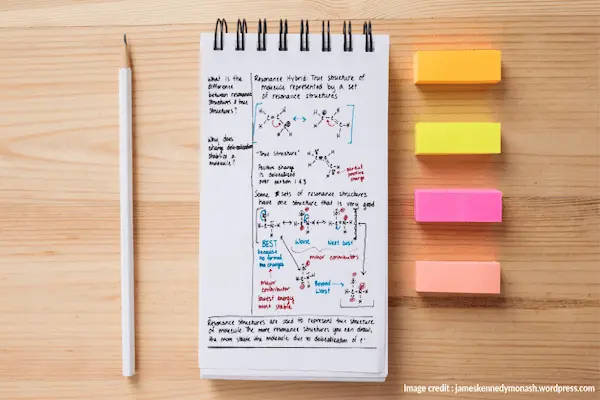
Before diving into detailed comparisons, having a broad overview of the major note-taking systems helps clarify their roles. Each one structures information differently and therefore activates different mental processes—categorization, summarization, connection-making, visual thinking or memory retrieval—so choosing the right method begins with understanding these differences clearly.
Summary of Methods
- Cornell Notes: A three-part page layout that emphasizes cues, main notes and a summary to reinforce understanding.
- Outline Method: Indentation-based structure ideal for hierarchical information and linear subjects.
- Mind Map: A visual web of concepts radiating from a central idea, excellent for brainstorming and creative subjects.
- Charting Method: Table-based notes for comparing categories or sequences.
- Sentence Method: Line-by-line capturing of ideas for fast-paced lectures.
- Recall Practice Page: Notes structured specifically to trigger memory retrieval rather than record content passively.
Pros and Cons Table Comparing Note Taking Methods
This table summarizes the advantages and disadvantages of each method to help you quickly compare note taking systems side by side.
Pros vs. Cons Comparison
- Cornell Notes
- Pros: reinforces memory through cues; organizes information clearly; ideal for reviewing; supports spaced repetition.
- Cons: setup takes time; less suitable for highly visual subjects; requires active summarization.
- Outline Method
- Pros: simple to create; efficient for lectures; excellent for structured subjects; easy to convert into study sheets.
- Cons: weak for visual learners; ineffective for nonlinear subjects; can become too detailed.
- Mind Map
- Pros: enhances creative thinking; boosts conceptual connections; ideal for big-picture understanding.
- Cons: difficult for dense detail; can get messy; not ideal for fast lectures.
- Charting Method
- Pros: perfect for comparing categories and timelines; great for history, biology or classification-heavy topics.
- Cons: time-consuming; unsuitable for free-flowing information; requires predetermined categories.
- Sentence Method
- Pros: fast; ideal for rapid lectures; captures high volume quickly.
- Cons: creates long, disorganized notes; requires reformatting later; reduces emphasis on connections.
- Recall Practice Pages
- Pros: maximizes memory; transforms notes into active recall triggers; great for exam prep.
- Cons: not suited for initial note-taking; takes extra time; requires subject understanding.
When to Use Each Note-Taking Method
Choosing the right method depends heavily on the content you are studying, the format of the learning session (lecture, reading, workshop, online course), your personal learning style and your goal—memorization, analysis, connection-building, review or brainstorming.
Best Use Cases by Method
- Cornell Notes: best for reviewing textbooks, structured lectures and subjects requiring thorough retention such as biology, psychology or business theory.
- Outline Method: excellent for linear topics, lecture-heavy classes, legal material, outlines for papers and summarizing long chapters.
- Mind Maps: ideal for brainstorming essays, developing project ideas, understanding systems, and connecting interrelated concepts like in philosophy or design.
- Charting Method: great for comparing historical periods, anatomy categories, chemical groups, case studies or vocabulary families.
- Sentence Method: helpful for fast-paced lectures with unpredictable structures, such as conferences or workshops.
- Recall Practice Pages: best for reviewing before exams, strengthening memory of definitions or practicing complex concepts.
How to Set Up Each Note Taking Method
Once you compare note taking systems, the next step is understanding how to create each one quickly and effectively, so setup becomes smooth and consistent. Each method has a simple process, which becomes second nature after a few repetitions.
How to Set Up Cornell Notes
- Divide your page into three sections: a narrow left column, a wider right column and a bottom summary box.
- Use the right column for main notes; keep information clear and concise.
- Fill the left column with cues, keywords, questions or memory triggers.
- Write a summary at the bottom after finishing the session.
- Use the cues later to practice recall by covering the main notes.
How to Set Up the Outline Method
- Start with the main topic at the far left margin.
- Indent subtopics beneath each major theme.
- Add supporting details under each subtopic with further indentation.
- Use numbering or bullet styles to maintain structure.
- Review the outline afterward to identify gaps.
How to Create a Mind Map
- Write the central idea in the middle of the page.
- Add branches for major concepts radiating outward.
- Attach smaller branches for supporting details.
- Use shapes, clusters or spacing to show relationships.
- Add arrows or connections as needed to show links.
How to Make a Charting Method Page
- Draw a table with columns based on categories or concepts.
- Label each column clearly.
- Fill in rows as you gather information.
- Review patterns and comparisons visually.
- Use charts for timelines, contrasts or taxonomies.
How to Use the Sentence Method
- Write each idea or fact on a new line as it comes.
- Keep sentences short so they can be reorganized later.
- Record as many ideas as you can without stopping.
- Rewrite notes into another method for clarity afterward.
- Use this method when information flow is unpredictable.
How to Build Recall Practice Pages
- Write questions based on your notes instead of summarizing information.
- Leave space beneath each question to write the answer later.
- Use these questions to quiz yourself without looking at your notes.
- Create variations: flashcard pages, problem sets or definition prompts.
- Repeat questions across spaced intervals for stronger memory.
Example-Rich Comparisons of Note Taking Methods
The best way to understand note taking methods compared is to examine practical examples that illustrate how each method handles the same type of information. These example comparisons allow you to see the structural differences and determine which method feels more intuitive.
Example Topic: Photosynthesis (Science Lecture)
- Cornell Notes: cues include “chlorophyll,” “light reactions,” “energy conversion”; right column includes step-by-step process; summary explains main function.
- Outline Method: I. Photosynthesis; A. Light reactions; B. Calvin cycle; C. Energy outputs.
- Mind Map: center labeled PHOTOSYNTHESIS with branches for light, chloroplasts, energy, glucose.
- Charting Method: columns for “Stage,” “Inputs,” “Outputs,” “Location.”
- Sentence Method: multiple short lines capturing main ideas in sequence.
- Recall Practice: questions like “What happens in the Calvin cycle?” or “Why is chlorophyll important?”
Example Topic: History Timeline
- Cornell: cues include dates; main notes outline events; summary synthesizes period themes.
- Outline: structured sequence of events with indented details.
- Mind Map: central timeline with branches for major eras.
- Charting: perfect for comparing events across regions or leaders.
- Sentence: rapid capture of facts; reorganized later.
- Recall: quiz questions about causes, events, individuals.
Printable Templates for Each Method
These text-based templates mimic printable layouts you can recreate in notebooks, apps or digital documents.
Printable Cornell Page
- Cues (Left Column): _________________________
- Main Notes (Right Column):
- _____________________________________________
- Summary: _________________________________
Printable Outline Page
- I. ____________________________________________
- A. ____________________________________________
- B. ____________________________________________
- 1. ____________________________________________
- 2. ____________________________________________
Printable Mind Map Page
- Central Topic: ______________________________
- Main Branches:
- • ____________________________________________
- • ____________________________________________
- • ____________________________________________
Printable Chart Table
- Column 1: ________________________________
- Column 2: ________________________________
- Column 3: ________________________________
Printable Recall Practice Page
- Question: _________________________________
- Answer: ___________________________________
Tips to Review Notes Effectively
Reviewing notes matters just as much as taking them, because information becomes knowledge only when it is processed repeatedly through recall, synthesis and spaced repetition. Reviewing strategically ensures you remember what you learn long term.
Review Strategies
- Use spaced repetition by revisiting notes after 1 day, 3 days, 7 days and 30 days.
- Summarize notes in your own words to reinforce comprehension.
- Turn notes into questions to test yourself without looking.
- Condense notes into shorter versions to identify key concepts.
- Teach the material aloud to strengthen understanding.
Common Review Mistakes
- Rereading passively without active recall.
- Avoiding summaries because they feel slow.
- Letting notes pile up until exam week.
- Not rewriting disorganized notes.
Final Checklist for Selecting the Right Method
- Determine whether your class or topic is linear, visual or comparison-heavy.
- Choose Cornell for deep review, Outline for structure, Mind Maps for connections.
- Use Charting for categories, Sentence for speed and Recall Pages for studying.
- Set up each template before the session so you do not lose time formatting.
- Review using spaced repetition and active recall.