
Learning how to estimate project time with accuracy, confidence and realism becomes an essential skill for any DIY enthusiast who constantly finds themselves surprised by how long projects end up taking, particularly because tasks that seem “quick” at first usually reveal hidden steps, preparation phases, cleanup requirements and small unexpected delays that expand the timeline far beyond the original guess, leading to frustration, rushed decisions or even abandoned projects.
Although underestimating tasks is extremely common among DIYers, especially those who work on home projects during weekends, free evenings or small pockets of time, the solution does not require magical intuition or decades of experience; instead, it comes from understanding a clear, structured, repeatable process that allows you to make realistic time estimation decisions, apply effective task breakdown techniques, evaluate buffer time correctly and build a planning system that respects the natural unpredictability of hands-on work.
This guide, written in an honest, example-driven and highly practical tone, will show you how to estimate project time using simple yet powerful strategies that transform overwhelming tasks into manageable sequences, helping you avoid underestimation traps, improve your judgment, reduce stress and complete your home projects with far more reliability than before.
Inside this article, you will find a breakdown method that teaches you how to split large tasks into measurable components, sizing techniques that prevent overly optimistic assumptions, buffer rules that protect you from delays, sample estimates based on real-world scenarios and a continuous review loop that gradually improves your estimation accuracy every time you complete a new project.
How to Estimate Project Time: Why DIY Projects Take Longer Than Expected
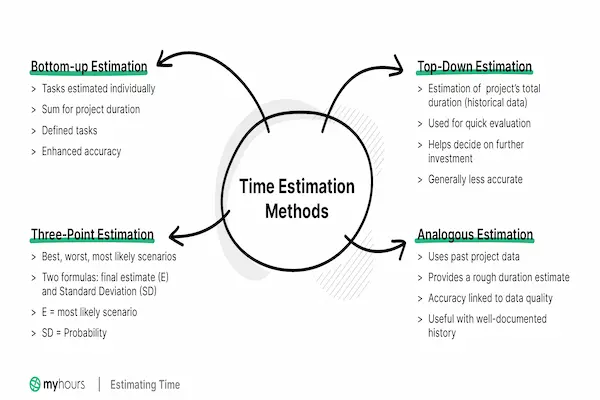
Most people underestimate project time because their brains compress tasks into simplified versions that overlook preparation steps, interruptions and the natural slow pace of hands-on work, especially when the project requires precision, drying times, adjustments, cleanup or multiple tools.
Whenever you imagine a task in your head, your mind tends to focus on the “ideal path,” ignoring real-life friction such as searching for materials, fixing small mistakes, dealing with distractions, re-reading instructions or adjusting plans mid-way, which is why planning becomes unrealistic unless you learn to break tasks down and account for necessary buffer time.
Understanding why timelines inflate allows you to create more accurate planning habits, rely on structured task breakdown, apply practical estimation strategies and approach each project with the level of detail required to make your predictions far more reliable.
The Task Breakdown Method: Your Foundation for Accurate Time Estimation
Creating reliable estimates begins with breaking your project into smaller, clearly defined tasks, since large tasks hide complexity, and the more hidden steps you identify, the more accurate your planning becomes.
Step-by-Step Breakdown Process
- Write the name of the project at the top of a page, keeping it as broad as needed.
- List every major phase you can think of, without worrying about order or detail.
- Break each phase into tasks that take less than one hour whenever possible.
- Split those tasks again if they still feel vague or contain multiple actions.
- Stop splitting only when each task feels like a clear, measurable action.
Using this structured task breakdown provides clarity, reveals hidden steps, exposes unrealistic assumptions and gives you an immediate sense of which phases will require the most time and preparation.
Techniques for Sizing Each Task Realistically
Sizing tasks is where many DIYers struggle because their instincts default to optimistic thinking, and although optimism is helpful for motivation, it damages your ability to estimate project time accurately unless you apply deliberate, corrective strategies.
The “Actual Time × 1.5” Rule
This rule improves accuracy by multiplying your first instinct by 1.5, transforming your optimistic guess into a more realistic estimate that accounts for friction, interruptions and slowdowns.
The “Experienced vs. New” Adjustment
-
- Add extra time if you are learning a new skill during the project.
- Add significant buffer time for tasks requiring precision, measurement or drying.
- Give generous estimates for steps involving tools you use rarely.
The “Time Blocks Instead of Minutes” Technique
Instead of estimating in small units like minutes—which often leads to underestimation—assign tasks into larger time blocks such as 30-minute, 1-hour or 2-hour increments, because larger blocks reflect the natural rhythm of DIY work where micro-delays accumulate.
Understanding Hidden Time Components
Accurate planning requires identifying all components beyond the core task, because hidden time drains often consume more hours than the actual work, and ignoring them guarantees poor estimates.
Common Hidden Tasks
- Finding or gathering tools scattered around the house or garage.
- Buying missing materials or returning to the store for something forgotten.
- Preparing the workspace, such as covering floors or clearing surfaces.
- Waiting for glue, paint, plaster or sealant to cure or dry.
- Cleaning tools and workspace after the task is finished.
- Fixing mistakes or redoing small parts of the project.
How to Account for Hidden Time
- Add at least 20–30% extra time for setup and cleanup when tasks are messy or tool-heavy.
- Add fixed blocks of drying or curing time based on materials used.
- Considering shopping time if materials are not yet available.
- Insert buffer blocks between large phases to avoid overlap.
How to Estimate Project Time Using the Buffer Method
One of the most realistic strategies involves adding well-defined buffer time, because even the best task breakdowns fail to capture every variable, and buffer time protects your schedule from setbacks without causing stress.
The Three Types of Buffer Time
- Micro-buffer: small increments of 5–10 minutes added to each task to absorb tiny delays.
- Phase buffer: 15–30 minutes added at the end of each major phase for reorganization.
- Project buffer: a larger block representing 10–30% of the total project time added at the end.
Buffer Rules to Keep Your Timeline Realistic
- Use bigger buffers for tasks involving drying, unpredictable materials or large tools.
- Double the buffer when working outdoors since weather changes interfere with timing.
- Keep a minimum of one buffer per project for emergencies or interruptions.
- Don’t remove buffer blocks even if you “feel confident”—they exist to correct optimism bias.
Time Estimation Examples for Common DIY Scenarios
Examples grounded in real situations make the process easier to understand, especially because DIY tasks vary in size and complexity, and comparing estimates across different types of projects gives you a clearer grasp of how to estimate project time realistically.
Example 1: Painting a Bedroom Wall
- Gathering supplies: 20 minutes
- Taping edges and preparing the room: 40 minutes
- Applying first coat: 45 minutes
- Drying time: 1–2 hours
- Applying second coat: 45 minutes
- Cleanup: 30 minutes
- Total realistic time: 4–5 hours (including buffers)
Example 2: Installing Shelves
- Measuring wall and marking placement: 30 minutes
- Gathering tools: 15 minutes
- Drilling holes and mounting brackets: 45 minutes
- Adjusting shelf level: 20 minutes
- Cleanup: 15 minutes
- Total realistic time: 2–2.5 hours
Example 3: Building a Small Garden Box
- Cutting wood pieces: 1 hour
- Assembling frame: 45 minutes
- Sanding edges: 40 minutes
- Applying sealant: 20 minutes + drying
- Cleanup: 20 minutes
- Total realistic time: 2.5 hours + drying time
How to Use Task Flow Planning to Improve Estimation
Once your tasks are broken down and sized, you can sequence them logically to create a time estimation plan that mirrors real workflow, helping you avoid underestimation caused by misplaced steps or poorly ordered activities.
Planning Steps
- Group tasks into phases such as preparation, execution and finishing.
- Order tasks by dependency (e.g., sanding must come before painting).
- Insert buffers between phases, not just between tasks.
- Review whether backtracking or rework is expected.
- Check for external constraints such as weather or material availability.
Signs Your Plan Is Realistic
- Your timeline includes non-work phases like drying or cleanup.
- The plan uses buffer time generously, especially around complex steps.
- No single task is larger than one hour unless absolutely necessary.
- You can track progress using measurable checkpoints.
Review Loop: How to Improve Your Estimates Over Time
Building long-term accuracy requires reviewing your completed projects, comparing your original estimates to real recorded times and adjusting your assumptions so that your planning becomes increasingly reliable with practice.
Post-Project Review Questions
- Which tasks took longer than expected and why?
- Did I include enough buffer time in the original plan?
- Were hidden steps responsible for most delays?
- Did interruptions or distractions influence the schedule?
- Was the task breakdown detailed enough?
How to Use Review Data
- Record the actual time next to the estimated time for each task.
- Highlight differences greater than 20% as areas needing deeper analysis.
- Create personal multipliers for repetitive tasks (e.g., “assembly tasks ×1.3”).
- Save your review notes in a dedicated journal or notebook.
Checklist for Accurate Time Estimation
This checklist ensures your estimation process remains structured, consistent and grounded in reality instead of optimistic assumptions.
- Break the project into clear, specific tasks.
- Estimate each task using time blocks rather than small units.
- Add buffers at task, phase and project levels.
- Identify all hidden time components and assign durations.
- Sequence tasks logically to avoid mismatched expectations.
- Include extra space for learning if the task is new.
- Use a review loop after completion to refine future estimates.
- Keep a log of past projects and their actual durations.