
Creating a goal setting worksheet for life becomes significantly more meaningful and motivating when you approach the process with a calm, reflective mindset that honors both your present reality and your future hopes, allowing you to translate long-held dreams into structured, actionable steps that move you forward with clarity, direction and confidence rather than leaving your next chapters to chance or relying solely on bursts of motivation that fade quickly under the pressures of adulthood, responsibilities and everyday uncertainty.
Many young adults find themselves standing at a threshold—excited to build a life they love, yet overwhelmed by countless choices, uncertain priorities, unclear values or habits that shift unpredictably—and this is precisely why creating a life goals worksheet helps transform vague aspirations into grounded commitments by guiding you through the internal work of defining what truly matters, identifying which priorities deserve your limited time and energy, mapping action steps that match your pace and designing routines that reinforce your growth even on days when progress feels slow or unglamorous.
This extensive guide will walk you step by step through a complete goal setting worksheet for life, offering a values clarification exercise, a simple method for identifying priorities, a SMART goals framework you can adapt to any personal vision, an action plan template that breaks down your goals into concrete steps, a review cadence that helps you maintain long-term consistency, and a printable-style worksheet you can copy directly into your journal, notes app or planning system without needing anything beyond paper, intention and a willingness to reflect honestly.
By the end of this article, you’ll have a full roadmap designed to help you move from uncertainty toward purposeful action, giving you the tools needed to create a lifestyle aligned with your values, your identity, your dreams and your evolving sense of direction.
Goal Setting Worksheet for Life: Why It Matters
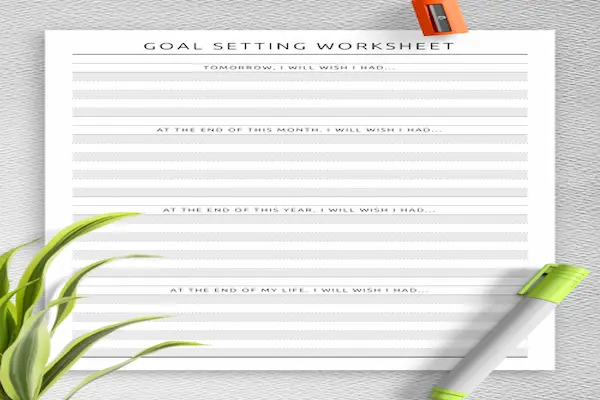
Understanding why goal setting matters helps you enter the process with intention, since setting life goals is not about rigid schedules or unrealistic expectations, but about defining the direction you want to grow, the identity you want to embody and the habits that support your long-term wellbeing and success.
A goal setting worksheet for life works because it converts abstract desire into a structured process—one that encourages self-awareness, empowers decision-making and provides clarity when life feels noisy or chaotic, making it easier to stay aligned with what truly matters rather than drifting into patterns dictated by stress, distraction or other people’s expectations.
Goal-setting also strengthens your sense of agency, reminding you that you do not have to know every step of your journey; you only need the next one—then the next—and a roadmap that evolves as you grow.
Before You Begin: A Reflective Mindset for Life Planning
Approaching your life goals worksheet with a reflective mindset helps you avoid creating goals based on comparison, pressure or external validation, and instead encourages you to choose direction based on your values, your interests and the life you want to build intentionally.
Helpful Mindset Principles
- Your goals are allowed to evolve: life changes, and your plans can change too.
- Small steps count: progress is cumulative, not instantaneous.
- Reflection fuels clarity: writing reveals insights thinking alone cannot.
- Values guide priorities: knowing what matters ensures you do not chase goals that drain you.
- Action matters more than perfection: imperfect steps build a meaningful life.
Values Exercise: Identify What Matters Most
A values exercise forms the foundation of any goal setting worksheet for life because goals become more meaningful when they arise from what you genuinely care about rather than from societal pressure, comparison with peers or vague expectations about what adulthood “should” look like.
You can identify your values by exploring themes that consistently matter to you across relationships, work, creativity, health, lifestyle and personal growth.
Step 1: Circle or Select Values That Resonate
- Growth
- Connection
- Stability
- Adventure
- Creativity
- Belonging
- Security
- Freedom
- Wellbeing
- Compassion
- Independence
- Learning
- Impact
- Balance
- Joy
Step 2: Narrow Your List to 5 Core Values
These represent what your future decisions should align with; they become the compass for your roadmap.
Step 3: Write Why Each Value Matters
- Why does this value matter to me?
- How does this value appear in my life currently?
- Where do I want this value to guide me?
Define Your Priorities: What Needs Attention Now
Defining priorities helps you determine which goals to pursue first, because even the most motivated learners cannot achieve everything at once; creating focus ensures you invest time in areas that matter instead of spreading yourself too thin.
Priority Categories
- Career or education
- Finances
- Health and wellbeing
- Relationships
- Personal development
- Creative expression
- Home environment
- Community or service
- Spirituality or introspection
Priority Ranking Exercise
- Choose your top three categories that require focus now.
- Describe what “improvement” would look like in each category.
- List key obstacles currently blocking your progress.
- Identify what support—internal or external—might help you move forward.
Creating Life Goals: Long-Term and Short-Term Versions
Goal creation becomes easier when broken into two layers—long-term aspirations and short-term goals—because this structure organizes your vision into manageable steps while still honoring your big dreams.
Long-Term Goals
- Where do you want to be in 3–5 years?
- Which identity do you want to step into?
- What major outcomes would feel fulfilling?
Short-Term Goals
- Which actions can be completed within 12 months?
- What can you realistically achieve this quarter?
- Which micro-goals support your long-term direction?
SMART Framework for Clear, Measurable Goals
Using the SMART framework helps transform wishful thinking into a precise goal that can be measured, celebrated and improved over time.
SMART Acronym Breakdown
- Specific: Clear and well-defined.
- Measurable: Can be tracked with numbers or milestones.
- Achievable: Realistic with your time and resources.
- Relevant: Aligned with your values and priorities.
- Time-bound: Anchored by a timeline.
SMART Goal Examples
- “Save $2,000 for an emergency fund in seven months by setting aside $75 weekly.”
- “Complete a beginner online Spanish course within 16 weeks by studying 20 minutes daily.”
- “Run a 5K in four months by following a three-day-per-week training plan.”
Action Plan: Break Goals Into Steps
Action steps transform your goals from concepts into achievements through consistent, intentional progress, especially when broken down into micro-tasks that reduce overwhelm.
Action Plan Checklist
- Identify the first small action needed.
- Break the goal into 5–12 micro steps.
- Assign approximate timelines to each step.
- Note required skills or resources.
- Determine potential obstacles and solutions.
Micro-Step Examples
- Buy or gather materials you already own.
- Set up a space dedicated to your goal.
- Schedule the first study session.
- Complete one module or chapter.
- Review progress and adjust pace.
Weekly Review Cadence: Stay Consistent and Motivated
Adding a weekly review cadence to your life goals worksheet keeps goals visible and prevents them from fading into the background of daily life, while also reinforcing your progress and building resilience through self-reflection.
Weekly Review Structure
- Review which goals received attention.
- Identify what helped or hindered your progress.
- Adjust timelines or steps based on energy and life events.
- Celebrate one win, no matter how small.
- Plan next week’s top three actions.
Monthly Review Questions
- Which goals moved forward?
- Where do I feel stuck?
- Which habits supported me?
- What changes should I make for next month?
- What feels most important moving forward?
Printable-Style Goal Setting Worksheet for Life
This section includes a copy-friendly goal setting worksheet for life that you can recreate in a notebook, planner or journal; feel free to customize the categories to match your style.
Section 1: Values
- My top five values:
- Why these values matter to me:
Section 2: Life Priorities
- Top three areas of focus:
- Reason these priorities matter now:
- What improvement will look like:
Section 3: Long-Term Goals
- 3–5 year vision:
- Identity and lifestyle shifts desired:
Section 4: Short-Term Goals
- Goals for the next 12 months:
- Quarterly objectives:
Section 5: SMART Goals
- Specific:
- Measurable:
- Achievable:
- Relevant:
- Time-bound:
Section 6: Action Plan
- Goal:
- Micro-steps:
- Required resources:
- Deadline:
- Potential challenges:
- Solutions:
Section 7: Weekly Review
- Wins:
- Challenges:
- Adjustments:
- Next actions:
Reflection Prompts for Life Goals
Reflection deepens your understanding of your goals, helping you stay grounded in your values and committed to your direction.
Prompts List
- What does “success” mean to me right now?
- Which habits help me feel aligned with my goals?
- What obstacles do I anticipate, and how can I prepare?
- How do I want my future self to describe this year?
- What emotions arise when I think about my goals?
Final Checklist for Your Goal Setting Worksheet for Life
This final checklist ensures your plan feels complete, structured and ready for real-world implementation.
- Clarified your values and priorities.
- Mapped long-term and short-term goals.
- Used SMART framework to strengthen your goals.
- Broke goals into micro-steps.
- Created a weekly cadence for tracking progress.
- Designed a review system for adjusting direction.
- Built reflection prompts to deepen insight.
- Committed to gentle consistency over perfection.
- Created a printable-style worksheet to revisit often.
- Celebrated your decision to grow with intention.