
Deciding to build a personal mission statement is often the turning point for professionals who feel ready to clarify their direction, strengthen their purpose, reconnect with their values and design a life compass that supports meaningful decisions rather than relying on external expectations or inconsistent motivation, which is why creating a mission statement becomes an experience that blends reflection, intention, structure and emotional honesty in a way few exercises can match.
Long-term goals, daily habits, career choices, relationship dynamics and personal priorities all become more coherent once your inner principles are articulated clearly, because a mission statement distills the essence of who you are and who you want to become, allowing you to filter opportunities with confidence and approach challenges with steadiness instead of doubt.
Many professionals seeking direction feel overwhelmed by the idea of shaping a personal mission, imagining it must sound poetic, grandiose or flawlessly written, yet mission statements work best when they are simple, authentic and practical enough to be used as a recurring guide rather than a decorative sentence tucked away in a notebook.
This comprehensive guide offers a warm, structured and deeply reflective approach to help you build a personal mission statement using prompts, value banks, examples, refinement steps and a printable worksheet, all designed to support a thoughtful process without pressure or perfectionism.
By exploring long explanations, multiple lists, actionable steps and guided reflection tools, you will learn how to transform your inner principles into a concise statement that functions as your personal life compass.
Why Building a Personal Mission Statement Matters
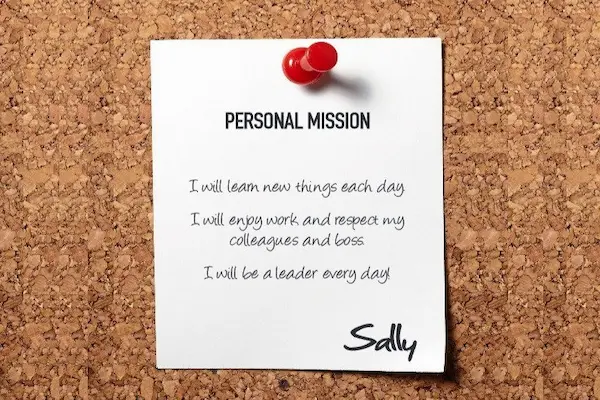
A well-crafted mission statement helps simplify decision-making because it acts as a foundation you return to each time you face uncertainty, transitions or competing priorities, reminding you of what genuinely matters and steering you away from choices misaligned with your identity or long-term aspirations. When professionals lack clarity about purpose and values, they often drift into work, projects and commitments that feel draining rather than fulfilling, eventually leading to burnout, frustration or a sense of living on autopilot; however, a mission statement interrupts this pattern by offering direction rooted in self-awareness instead of external approval.
Key Benefits of a Personal Mission Statement
- Creates a stable reference point for making hard decisions with confidence.
- Clarifies what matters most so you avoid energy-draining obligations.
- Strengthens your sense of purpose and long-term consistency.
- Aligns professional direction with personal meaning.
- Supports motivation by grounding daily habits in deeper intention.
Understanding the Components of a Strong Mission Statement
Before you build a personal mission statement, having a clear understanding of its building blocks makes the process easier. A strong mission statement usually draws on your values, purpose, strengths, desired impact and preferred ways of showing up in the world, weaving these elements into a sentence or short paragraph that feels both concise and emotionally grounded.
Core Elements to Include
- Values: the principles that shape how you treat others and yourself.
- Purpose: the deeper reason behind your actions and ambitions.
- Strengths: the abilities you rely on naturally and consistently.
- Impact: the way you want your actions to influence people or environments.
- Direction: the type of life or work you aim to build through your choices.
Guided Prompts to Build a Personal Mission Statement
Using reflective prompts helps you shift from vague ideas to meaningful clarity, because writing encourages the mind to slow down, examine patterns and articulate insights that might otherwise remain unspoken. These prompts cover values, purpose, impact, identity, strengths and future intention, providing a broad foundation for your mission statement.
Values Prompts
- Which qualities do I admire most in people I respect?
- What principles do I refuse to compromise, even when challenged?
- What behaviors make me feel aligned and proud?
- Which moments from my past reflect my deepest values?
- What patterns in my life show what matters most to me?
Purpose and Meaning Prompts
- What gives me a sense of meaning at the end of the day?
- What activities make me lose track of time because they feel fulfilling?
- Which problems in the world or in my community do I feel drawn to improve?
- What themes appear repeatedly in my most satisfying accomplishments?
- What do I want my life to stand for?
Strengths Prompts
- What tasks feel natural or energizing to me?
- Which strengths do others recognize in me?
- How do I support others when they need help?
- What makes my way of solving problems unique?
- How do I show up consistently, even in challenging moments?
Impact and Contribution Prompts
- Who do I hope to positively influence through my work or presence?
- What emotional experience do I want others to feel when interacting with me?
- What long-term change do I want to contribute to?
- How do I want to leave environments better than I found them?
- What ripple effects do I want my actions to create?
Future Vision Prompts
- What kind of person do I want to be five years from now?
- What consistent behaviors reflect the future identity I aim for?
- How do I want to respond to challenges in my future life?
- What type of work would make me proud in the long run?
- What values do I want my future decisions to express?
Word Banks to Inspire Your Mission Statement
Word banks help transform vague reflections into clear, strong language. These collections of values, verbs and impact words give you vocabulary to express your mission without overthinking the wording or forcing inspiration.
Values Word Bank
- Integrity
- Curiosity
- Compassion
- Growth
- Service
- Clarity
- Accountability
- Kindness
- Creativity
- Consistency
Purpose Word Bank
- Guide
- Support
- Improve
- Build
- Empower
- Communicate
- Inspire
- Connect
- Strengthen
- Transform
Impact Word Bank
- Confidence
- Calm
- Direction
- Structure
- Momentum
- Growth
- Clarity
- Trust
- Collaboration
- Stability
Examples of Well-Crafted Personal Mission Statements
Examples help clarify how abstract ideas translate into concise sentences. These mission statements are intentionally written in warm, grounded tones to inspire your own phrasing.
Short Examples
- “To help others grow through clarity, compassion and consistent support.”
- “To create meaningful work that inspires reflection and strengthens understanding.”
- “To act with integrity while pursuing growth and contributing positively to every environment I join.”
- “To bring structure, calm and thoughtful communication to every project I engage with.”
- “To serve others by fostering clarity, encouragement and honest connection.”
Medium-Length Examples
- “My mission is to pursue meaningful work that aligns with my values of curiosity, compassion and accountability, while contributing to environments where people feel supported, understood and encouraged to grow.”
- “My mission is to strengthen communities through thoughtful communication, consistent follow-through and a commitment to improving processes that make life easier for others.”
- “My mission is to approach life with integrity, creativity and calm purpose, helping others navigate challenges with structure and clarity.”
Longer, Narrative Examples
- “My mission is to learn continuously, act with kindness and contribute thoughtfully to the spaces I join, using clarity, curiosity and patient listening to help myself and others move toward meaningful growth.”
- “My mission is to build a life guided by compassion, responsibility and personal development, consistently choosing actions that bring value, calmness and direction to people and projects around me.”
How to Refine Your Mission Statement
Refining your mission statement is often the longest part of the process because it requires reducing multiple reflective answers into one concise, meaningful statement. Taking your time ensures the final version truly represents you rather than simply sounding impressive.
Refinement Steps
- Gather all your notes from prompts, values, word banks and reflections.
- Highlight keywords that appear repeatedly.
- Group related ideas into themes such as “support,” “growth,” or “clarity.”
- Draft three different versions of your sentence: short, medium and long.
- Read each version aloud to notice which feels authentic and grounded.
- Remove abstract words that dilute meaning; keep concrete values.
- Focus on action verbs that reflect who you are becoming.
- Share your draft with someone you trust if you want outside perspective.
- Select the version that feels stable, inspiring and realistically applicable.
Printable Worksheet for Building Your Mission Statement
This simple worksheet replicates the format of a printable page you can copy into a journal or document. It helps you organize thoughts cleanly while keeping your reflective process structured.
Values Reflection
- My Core Values: ______________________________________
- Values I Want to Strengthen: __________________________
Purpose Exploration
- What Gives My Life Meaning: __________________________
- Why I Care About These Themes: ______________________
Strengths Inventory
- My Natural Strengths: _______________________________
- How I Use These Strengths: ___________________________
Impact Vision
- Impact I Want to Create: _____________________________
- Who I Hope to Influence Positively: __________________
Mission Statement Drafts
- Short Draft: ________________________________________
- Medium Draft: _______________________________________
- Long Draft: _________________________________________
How to Use Your Mission Statement Daily
Your mission statement becomes powerful only when used as a living reference point rather than a decorative sentence. Integrating the statement into your routines helps you align choices with values and purpose.
Daily Integration Strategies
- Read your mission each morning as a grounding intention.
- Evaluate major decisions by asking how they align with your mission.
- Use your mission as a filter for new opportunities.
- Reflect weekly on how well your actions matched your mission.
- Rewrite or refine it yearly as you grow and evolve.
Do and Don’t List for Mission Statement Creation
Do
- Keep it simple and authentic.
- Focus on values rather than accomplishments.
- Use action verbs that describe your direction.
- Allow the statement to evolve over time.
- Choose clarity over complexity.
Don’t
- Force the statement to sound impressive.
- Use vague buzzwords with no personal meaning.
- Try to cover every area of your life in one sentence.
- Create a mission based on others’ expectations.
- Ignore your own voice in favor of professional language.