
Starting your first beginner woodworking project can feel equal parts exciting and intimidating, especially when you only have a few basic tools and want to transform plain lumber into something useful without risking mistakes that slow down your learning curve.
Creating a simple wall shelf is one of the most confidence building projects for new woodworkers, because this easy wood shelf teaches essential skills such as measuring accurately, cutting safely, sanding effectively, assembling cleanly and finishing wood so it looks intentional instead of improvised.
This guide breaks down everything you need with a tone that is safety first, precise and highly visual so you can picture each step, understand exactly what to do and avoid the common errors that beginners often face when working with real lumber for the first time.
You will receive a complete cut list, a detailed tools needed checklist, step by step assembly instructions, sanding advice, finishing suggestions, wall mounting methods and essential safety notes to keep your hands, eyes and workspace protected during the entire build.
By the end of this project, you will be able to build an easy wood shelf with confidence, understand the basics of joinery and feel comfortable enough to start tackling other beginner projects that use the same foundational skills.
Why a Simple Shelf Is the Perfect Beginner Woodworking Project
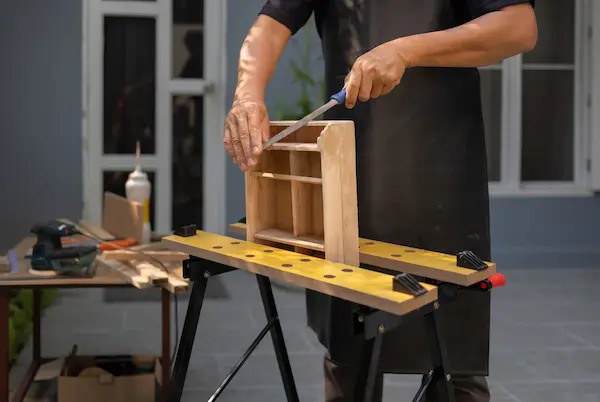
Building a simple shelf teaches core woodworking principles without overwhelming you with complicated joints, advanced tools or complex layouts, and every skill learned here transfers directly to future furniture projects.
Working on a project that stays small, manageable and clear helps beginners improve measuring, marking, cutting and sanding techniques while keeping the build stress free.
Because a shelf uses only a few boards and minimal hardware, you can practice handling your drill and saw in short, safe sessions that reduce fatigue and keep your focus sharp.
Mounting the finished shelf to your wall also gives you practical experience with anchors, screws, studs and leveling, which are essential skills for anyone wanting to grow as a confident DIY woodworker.
Seeing a shelf you built from raw lumber holding books, plants or tools gives an enormous sense of achievement and inspires you to continue learning at your own pace.
Materials and Tools Needed for Your Easy Wood Shelf
Gathering materials before you begin ensures that the entire project flows smoothly, without stopping halfway to hunt for sandpaper, screws or a pencil.
Because this beginner woodworking project simple shelf uses straightforward lumber and minimal hardware, you can keep your budget small and your tool list simple.
Tools Needed to Build the Shelf
Your tool kit for this project can stay very compact, which makes the shelf accessible even if you only have a drill and a basic saw.
- A handsaw, circular saw or jigsaw with a sharp blade appropriate for wood.
- A power drill with both drill bits and screwdriver bits.
- A measuring tape long enough for all boards.
- A carpenter’s square or combination square for marking straight lines.
- Medium and fine grit sandpaper (120 and 220 recommended).
- Safety glasses for eye protection.
- Workbench, sawhorses or a sturdy table for safe cutting support.
- A pencil or lumber marking tool for crisp cutting lines.
Optional tools for an even smoother build include clamps, a sanding block, a stud finder and a level for mounting.
Materials You Will Need
The materials list remains intentionally simple so first time woodworkers feel empowered rather than overwhelmed.
- One pine board or similar softwood for the shelf itself.
- Two smaller boards to serve as side supports or brackets.
- Wood screws sized correctly for thickness of boards.
- Wall anchors or mounting screws for the desired mounting method.
- Wood glue if you want additional strength (optional for beginners).
- Wood finish, oil or paint depending on your aesthetic preference.
Softwoods such as pine, spruce and fir are ideal for beginners because they are easier to cut, sand and finish without requiring specialized blades or advanced skills.
Cut List for a Beginner Woodworking Project Simple Shelf
Having a clear cut list removes guesswork from your measurements and helps you stay organized as you cut each board for your easy wood shelf.
The dimensions below assume a standard medium sized shelf suitable for books, plants and decor, but you can adjust the numbers to fit your space as long as proportions remain balanced.
Standard Cut List
- 1 board for the shelf: 24 inches long, 1 inch thick, 6 to 8 inches deep.
- 2 side brackets: 6 to 8 inches tall and 5 to 6 inches deep.
- Optional back strip (for extra mounting support): 24 inches long and 2 to 3 inches tall.
You can modify the length of the shelf board, but beginners often find success sticking to a length between 18 and 30 inches to keep weight manageable during mounting.
Measuring Tips Before Cutting
- Place the measuring tape along the board and mark the exact length with a sharp pencil line.
- Use a square to extend the mark across the entire width of the board for a perfectly straight cutting guide.
- Double check measurements before cutting, as beginners often misread tape increments when excited or rushed.
- Keep hands clear of the cutting area and clamp the board to a stable surface whenever possible.
- Make slow, steady cuts to prevent splintering and maintain control of the saw.
Taking extra time to measure twice and cut once prevents waste and boosts confidence during future woodworking projects.
Preparing Lumber: Sanding, Checking Edges and Ensuring Safety
Before assembling your beginner woodworking project simple shelf, preparing the wood properly ensures your finished project looks clean, smooth and professional, even if it is your very first build.
This stage is also where safety habits become automatic, which is essential for every woodworking project that follows.
How to Sand and Prep Each Board
- Start with 120 grit sandpaper to remove saw marks, rough patches and splinters along the edges.
- Sand in the direction of the grain, because sanding against the grain creates scratches that show through finishes.
- After smoothing with 120 grit, switch to 220 grit for a more refined surface that feels comfortable to the touch.
- Lightly round the front edges and corners of the shelf board to create a softer, more polished feel.
- Wipe dust away with a clean cloth or slightly damp rag so you can inspect the surface clearly before finishing.
Preparing boards gently and deliberately prevents splinters, improves appearance and gives your easy wood shelf a safely finished feel.
Safety Tips During Wood Prep
- Always wear eye protection when cutting or sanding wood to shield against sawdust and small debris.
- Work in a well ventilated area to avoid breathing too much dust.
- Secure your boards using clamps or non slip pads before sanding or shaping.
- Keep fingers away from cutting paths and never force your saw through the wood.
- Check every board for knots or cracks that may weaken structural integrity.
Developing safe habits early protects your workspace, your hands and your long term interest in woodworking.
Assembly Steps for Your Beginner Woodworking Project Simple Shelf
Once the wood is prepared and the cut list completed, you are ready to assemble your easy wood shelf using straightforward steps that rely on precise alignment and patient drilling rather than complicated joinery.
This assembly method introduces essential woodworking concepts such as pre drilling, countersinking, spacing and bracket support.
Step 1: Positioning the Shelf and Brackets
- Lay the shelf board face down on a flat surface with the long edge closest to you.
- Place one bracket flush against each end of the underside, making sure the brackets stand perfectly vertical.
- Use a square to confirm that each bracket forms a clean 90 degree angle to the shelf board.
- Mark two screw locations on each bracket that align with the center of the shelf thickness.
- Check spacing by visualizing how weight will be distributed once the shelf carries books or decor.
Careful positioning at this stage keeps your shelf level and strong once mounted.
Step 2: Pre Drilling Holes for Clean Screws
Pre drilling prevents wood from splitting and helps screws drive straight into the brackets without wandering.
- Choose a drill bit slightly thinner than the screw diameter and secure it in your drill.
- Drill pilot holes through your bracket marks at moderate speed, keeping the drill aligned vertically.
- Repeat on both brackets, checking that holes remain centered in the shelf thickness.
- Optionally countersink the holes slightly so screw heads sit flush with the bracket surface.
- Remove sawdust from holes using a gentle tap or quick burst of air.
This step greatly improves the professionalism of your beginner woodworking project simple shelf by ensuring screws sit perfectly and boards do not crack.
Step 3: Attaching Brackets to the Shelf Board
- Switch to a screwdriver bit appropriate for your wood screws.
- Place the bracket back into position against the shelf underside.
- Drive screws slowly and steadily into your pilot holes to avoid stripping.
- Repeat on the second bracket, checking alignment as you tighten each screw.
- Flip the shelf over and inspect for wobbling or uneven attachment.
When completed carefully, the shelf should feel solid even before it touches the wall.
Step 4: Optional Back Support Strip
Adding a back support strip is optional but helpful for beginners who want additional strength and easier wall mounting.
- Place the strip flush along the back edge of the shelf.
- Mark screw locations evenly across its length.
- Pre drill and attach the strip using short wood screws.
- Double check that it sits flat without bending or gaps.
- Use this strip later as your primary mounting anchor.
Although optional, this extra board simplifies mounting and boosts weight capacity noticeably.
Finishing the Shelf: Sanding, Staining, Sealing or Painting
A well finished shelf looks polished, resists moisture and becomes much easier to clean, which makes finishing an important part of every beginner woodworking project simple shelf.
This step also introduces you to basic finishing products commonly used in woodworking.
Choosing a Finish Type
- Clear oil finish brings out natural grain and enhances warmth without changing color drastically.
- Stain darkens the wood and adds a more dramatic look suitable for rustic or modern decor.
- Polyurethane or clear sealant provides a protective coating ideal for shelves that hold plants or kitchen items.
- Paint offers a clean, customizable appearance and can hide minor sanding imperfections.
Beginners often enjoy oil or clear finishes because they are difficult to mess up and provide immediate improvement in appearance.
Steps to Apply a Clean Finish
- Sand the entire shelf lightly with 220 grit to remove any final roughness.
- Wipe away dust using a tack cloth or slightly damp rag.
- Apply your finish of choice using a clean cloth, brush or foam applicator.
- Allow the finish to dry completely as specified on the product label.
- Add a second coat for durability, repeating sanding between coats if needed.
A smooth finish gives your easy wood shelf a professional appearance and protects your effort for years to come.
Wall Mounting Methods for Your Easy Wood Shelf
Mounting your shelf securely is essential for both safety and long term performance, especially when storing heavy items like books, jars or tools.
This section covers multiple wall mounting options so you can choose the method that fits your wall type, tools and confidence level.
Method 1: Stud Mounting for Maximum Strength
Mounting into studs provides the strongest support and is highly recommended for most beginner woodworking projects simple shelf installations.
- Use a stud finder to locate studs along your wall.
- Mark stud locations lightly with a pencil.
- Hold your shelf against the wall at the desired height.
- Level the shelf using a bubble level.
- Drive long wood screws through the back support strip directly into the studs.
If your wall allows access to studs, this method offers excellent load capacity and reliability.
Method 2: Drywall Anchors for Walls Without Studs
If studs are not available where you want the shelf, drywall anchors provide a secure alternative when matched to the correct weight rating.
- Mark hole locations at the points you want to mount.
- Drill pilot holes for your specific anchor type.
- Insert anchors fully until they sit flush with the wall surface.
- Position your shelf bracket or back strip over the anchors.
- Drive mounting screws into the anchors until snug.
Choosing high quality anchors ensures your reusable wall shelf stays steady under daily weight.
Method 3: Keyhole or Hidden Bracket Mounting
Hidden mounting methods create a sleek modern look but require more precision during layout and drilling.
- Keyhole brackets offer a flush mount appearance.
- Floating shelf hardware hides all mounting points.
- Metal L brackets provide a minimal but visible structure.
Beginners can try visible brackets first and progress to hidden mounts as skills grow.
Safety Notes Every New Woodworker Must Follow
Safety remains the most important part of any woodworking project, and building this beginner woodworking project simple shelf offers plenty of opportunities to practice smart habits.
General Woodworking Safety
- Wear safety glasses anytime sawdust could fly toward your face.
- Keep hands away from saw blades and always maintain stable footing.
- Unplug power tools before changing bits or blades.
- Never rush through cuts; slow and steady movements keep you safe.
- Clean up sawdust frequently to maintain visibility and reduce slipping hazards.
Safety During Mounting
- Ensure your ladder or stool is stable before climbing.
- Double check that mounting hardware matches the weight of your shelf.
- Secure the shelf fully before placing items on it.
- Test the shelf by pressing gently downward before loading weight.
- Avoid mounting above beds, cribs or seating unless absolutely secure.
Practicing these habits early will keep you — and your space — safe and inspired to continue woodworking.
Final Thoughts: Your First Step into Woodworking Success
Completing this beginner woodworking project simple shelf marks an important milestone in your journey as a new woodworker, because it proves that with basic tools, careful measurements and safe techniques, you can create functional pieces that improve your home and build your confidence.
From your first cut to the final wall mounting screw, every step teaches skills you will reuse in future projects such as building benches, tables, plant stands and decorative wall pieces.
Once your shelf is hanging proudly on the wall, take a moment to appreciate how much you accomplished with your drill, saw, patience and attention to detail.
Feel encouraged to try variations — longer shelves, deeper designs, painted finishes, curved brackets — because each new project expands your woodworking vocabulary and helps transform simple tools into long term creative companions.
As you grow more comfortable with wood grain, drill control, sanding technique and finishing, woodworking becomes less intimidating and far more enjoyable, evolving into a rewarding hobby that brings both practicality and beauty into your home.
Any time you want to practice your skills again, return to this simple shelf design, adjust the dimensions and build another version, using each attempt to sharpen your craftsmanship and continue your journey in this satisfying DIY craft.