
Developing confidence in public speaking becomes far more approachable, empowering and realistic when you adopt a structured routine that helps you practice speaking at home without relying on an audience, because many professionals preparing for a presentation quickly realize that most of their communication anxiety comes from uncertainty about how their voice sounds, how their pacing flows, how their ideas connect or how their presence translates in real time, and the easiest way to reduce this uncertainty is by creating an at-home practice ritual that supports steady improvement with each session.
Practicing alone may feel unusual at first, especially if you associate strong speaking skills with live audiences or group rehearsals, but solo public speaking practice at home allows you to remove external pressure, focus entirely on your growth, test ideas freely, notice patterns you usually overlook and build confidence gradually before delivering your talk to others, which makes the process not only accessible but also remarkably effective for busy professionals.
This comprehensive guide will give you everything you need to build a complete public speaking practice at home routine, including warm-up exercises that prepare your voice and body, a clear structure template for organizing your speech, timing and pacing drills for stronger delivery, a feedback checklist to assess your progress objectively, a printable-style tracker you can copy into any notebook or notes app, and supportive strategies to sustain your practice across multiple days or weeks so your communication skills grow steadily and reliably.
By the end, you’ll have a practice system designed to help you rehearse confidently, speak with clarity, refine your message and step into your presentation with readiness and self-assurance.
Public Speaking Practice at Home: Why It Works
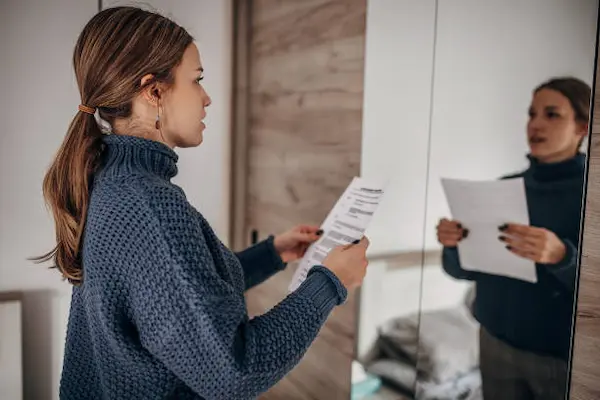
Understanding why at-home practice works so well encourages you to approach your routine with confidence rather than hesitation, because consistent solo practice gradually trains your brain to feel familiar with the speaking environment, helping you reduce anxiety, clarify your message and strengthen your voice without needing to schedule time with other people or wait for live feedback to develop your skills.
Practicing a speech at home also gives you the freedom to make mistakes privately, rehearse multiple variations of the same idea, observe your pacing or speech tempo without embarrassment, and capture recordings that allow you to analyze your delivery objectively, something many speakers never do until the final rehearsal — which is often too late to make meaningful improvements.
Solo practice complements professional polish because the more you rehearse independently, the more you gain control over consistency, clarity and timing, making your later rehearsals with people significantly stronger.
Before You Begin: Establish a Supportive Practice Mindset
Adopting a confidence-building mindset before you begin your public speaking practice at home can dramatically improve your progress, because your inner dialogue influences the tone of your voice, your willingness to take risks, your commitment to rehearsing and the patience you extend toward yourself when the process feels awkward.
Mindset Principles for Solo Practice
- Your early drafts do not need to sound polished: the first round is purely exploratory.
- Your voice improves with repetition: smooth delivery emerges through practice, not perfection.
- Your mistakes are data: every stumble reveals where to focus.
- Your growth is gradual: noticeable improvement comes from consistent short sessions.
- Your comfort increases when pressure decreases: at-home practice reduces the stakes.
Warm-Up Exercises: Prepare Your Voice and Body
Many speakers underestimate the impact of physical warm-ups, yet preparing your voice and body is one of the simplest ways to improve clarity, confidence, breathing flexibility and presence during your public speaking practice at home.
Step 1: Breath Activation Warm-Ups
- Slow inhale for four counts, slow exhale for six counts.
- Three rounds of belly breathing to expand diaphragmatic support.
- Gentle sighs to release throat tension.
- Hum on a single note to warm vocal cords safely.
Step 2: Mouth and Articulation Warm-Ups
- Exaggerated lip movements (“ooo” and “eee”).
- Soft tongue rolls to improve clarity.
- Jaw loosening through slow circular motions.
- Repeat a tongue-twister slowly to activate accuracy.
Step 3: Body Presence Warm-Ups
- Shoulder rolls forward and backward.
- Neck stretches to ease stiffness.
- Upright posture reset with lifted chest and relaxed shoulders.
- Gentle arm shake to reduce tension.
Organizing Your Talk: A Simple Speech Structure Template
Preparing a clear structure before you rehearse makes your public speaking practice at home far more efficient, because a well-organized message reduces rambling, improves pacing and helps your audience follow your ideas smoothly.
Universal Speech Structure Template
- Opening Moment: A relatable statement, statistic, story or question.
- Main Point 1: One essential idea supported by a short example.
- Main Point 2: A second idea, contrast or expansion with evidence.
- Main Point 3: One final takeaway or insight that adds balance.
- Transition Phrases: Smooth bridges between points.
- Closing Message: A clear end that reinforces your main purpose.
Helpful Variations
- Problem → Solution → Benefit structure for work presentations.
- Story → Insight → Application for motivational talks.
- Context → Data → Recommendation for analytical presentations.
Timing Drills to Strengthen Pacing and Presence
Pacing can make or break a presentation, and practicing timing drills at home helps you maintain clarity, reduce filler words, protect your breath patterns and match your delivery to the audience’s cognitive rhythm, which is especially important for busy professionals with limited practice time.
Timing Drill 1: The “One-Point Loop”
- Choose a single idea from your speech.
- Deliver it in 30 seconds.
- Deliver it again in 20 seconds.
- Deliver it again in 10 seconds.
- Deliver it once more in 45 seconds (expanded).
Timing Drill 2: The “Breathe-and-Pause” Pattern
- Speak one full sentence.
- Pause for one slow breath.
- Speak the next sentence.
- Repeat for 2–3 minutes.
Timing Drill 3: The “Speed-Contrast” Exercise
- Say your introduction at normal speed.
- Repeat it slowly with exaggerated pauses.
- Repeat it slightly faster for clarity control.
- End with a balanced version that feels natural.
How to Practice Your Speech Alone: A Structured At-Home Routine
A structured routine ensures you make consistent progress even when practicing alone, because following a predictable sequence reduces decision fatigue, guides your attention purposefully and gives you a clear flow from warm-up to rehearsal to correction.
Solo Practice Routine (Full Sequence)
- Complete a 3–5 minute vocal and physical warm-up.
- Review your outline or structure template for clarity.
- Read your speech aloud slowly to check flow.
- Practice one section at a time to refine meaning.
- Record yourself delivering the entire talk.
- Watch or listen back to identify micro-adjustments.
- Redo the talk with corrections.
- Practice pacing drills for smoother delivery.
- Repeat the speech with intentional pauses added.
- End with a confidence-building final run.
Record Yourself: The Most Valuable Solo Tool
Recording yourself may initially feel uncomfortable, but it remains one of the most transformative methods for improving clarity, pacing and confidence because hearing or watching your delivery from an outside perspective reveals details you simply cannot notice while speaking.
What to Observe When Reviewing Recordings
- Your tone and vocal variety.
- Your pacing (too fast, too slow or rushed near transitions).
- Your pauses (intentional or absent).
- Your hand gestures and posture.
- Your facial expressions—neutral, warm or tense.
- Your clarity—mumbling or crisp articulation.
- Your movement—smooth or distracting.
Repeat Recording Method
- Record a full version.
- Review for observations only (no self-judgment).
- Choose 2–3 actionable improvements.
- Record again focusing on those improvements.
- Repeat until delivery feels more controlled.
Feedback Checklist for Self-Evaluation
Using a feedback checklist gives your at-home practice structure, helping you evaluate your performance with clarity and consistency instead of relying on vague impressions.
Self-Feedback Checklist
- Clarity: Did I articulate every key point clearly?
- Pacing: Did my speed match the message?
- Voice: Did I vary tone, emphasis and energy?
- Pauses: Did I pause for emphasis or rush transitions?
- Confidence: Did I sound assured even when uncertain?
- Conciseness: Did I remove unnecessary filler phrases?
- Energy: Did my delivery reflect engagement?
- Structure: Did my points flow logically?
- Emotion: Did I add warmth or connection where needed?
- Memorability: Was my closing strong and clear?
Solo Practice Games to Keep Engagement High
Turning practice into a game-style exercise helps maintain motivation, especially when preparing speeches after long workdays, because playfulness reduces pressure and encourages experimentation.
Practice Games
- The 60-Second Story: Explain your topic in one minute.
- The Random Object Hook: Start your speech with an object near you.
- The Reverse Order Talk: Present your key points backwards to test clarity.
- The Gesture Limit Challenge: Deliver your speech using only three gestures.
- The Whisper Drill: Practice softly to improve breath control.
- The Big Energy Drill: Deliver with exaggerated enthusiasm for expressiveness.
Pacing Improvements: Techniques for Smooth Delivery
Pacing affects how much your audience understands and absorbs, so practicing pacing intentionally ensures your speech feels balanced and professional rather than rushed or sluggish.
Pacing Improvement Techniques
- Underline phrases where you want pauses.
- Mark transitions to slow down intentionally.
- Use finger tapping to maintain rhythm.
- Count breaths between major sections.
- Practice speaking at 75% speed for clarity drills.
Printable Public Speaking Practice Tracker
The following printable-style tracker helps you follow your improvement across days or weeks; copy it into your notebook or journal and fill it out as you practice.
Daily Practice Tracker
- Date:
- Warm-ups completed:
- Type of practice session:
- Key focus for today:
- What improved:
- What needs refinement:
- Confidence level (1–10):
Weekly Review Loop for Continuous Improvement
A weekly review loop helps you assess your growth consistently, ensuring your public speaking practice at home builds real progress rather than random practice sessions without direction.
Weekly Review Questions
- Which delivery elements improved significantly?
- Which parts still feel awkward or rushed?
- What new strengths appeared unexpectedly?
- What improvements happened in pacing or tone?
- What will I focus on next week?
Four-Week Public Speaking Practice Plan
This four-week plan helps structure your practice into manageable stages so you consistently improve your delivery, content and confidence.
Week 1: Foundation
- Warm up daily for 3–5 minutes.
- Outline your full speech structure.
- Practice reading aloud slowly.
- Record a baseline version.
- Identify your three biggest improvement areas.
Week 2: Clarity
- Work on articulation drills.
- Rewrite unclear sections of your speech.
- Practice pacing using timing drills.
- Record two mid-week practice runs.
- Adjust transitions for smooth flow.
Week 3: Expression
- Build vocal variety with tone and emphasis exercises.
- Experiment with gestures and movement.
- Practice expressive storytelling or examples.
- Record a full expressive version of your speech.
- Refine your opening and closing moments.
Week 4: Performance
- Do three full rehearsals at natural pace.
- Complete a mock timing run with full pauses.
- Practice with your outfit or props.
- Record your strongest version yet.
- Evaluate using the self-feedback checklist.
Confidence-Building Techniques for At-Home Speakers
Confidence grows from familiarity, repetition and self-support, and these techniques help you strengthen your internal voice as much as your spoken one.
Confidence Techniques
- Use a power posture before speaking.
- Visualize your audience reacting positively.
- Replace negative thoughts with neutral ones.
- Practice your speech in multiple rooms for adaptability.
- Celebrate one small improvement per day.
Final Checklist for Public Speaking Practice at Home
This checklist ensures your at-home speaking practice remains structured, supportive and confidence-building.
- Warm up your breath, voice and body.
- Use a clear structure template.
- Record multiple practice sessions.
- Use pacing and timing drills.
- Evaluate progress with a feedback checklist.
- Track improvements in a printable-style log.
- Repeat your weekly review loop.
- Follow a four-week progression plan.
- Adjust based on energy and clarity needs.
- End each practice session with encouragement.