
Learning how to start gratitude journaling becomes far more approachable, uplifting and emotionally grounding when you shift your approach away from the idea that journaling requires beautiful notebooks, perfect handwriting or long reflective sessions, and instead embrace the truth that cultivating gratitude can happen in small, meaningful moments when you pause long enough to notice the ordinary pieces of your life that hold warmth, safety, comfort or hope, allowing your mind to gently tilt toward positivity without forcing happiness or pretending everything is perfect.
Many new journalers feel intimidated when they first begin a gratitude journal because they believe their entries must be profound or poetic, yet the heart of gratitude practice lies not in elegant writing but in consistent noticing, where tiny details — a quiet morning, a soft pillow, a friend’s message, a moment of relief, a cup of warm tea — become anchors that shift your mindset slowly over time, helping you recognize that even on difficult days, small points of brightness quietly exist, waiting for your attention.
This guide will teach you how to start gratitude journaling in a warm, brief and habit-focused way, offering a deeply practical, highly supportive structure with thirty daily prompts, simple habit stacking techniques, short examples for beginners who feel stuck, optional templates that make the practice easier, research snippets that explain why gratitude supports emotional well-being and practical habit tips that help you stay consistent even when motivation dips or days feel heavy.
By the end of this article, you will understand how to create a gratitude journal routine that feels accessible, real and emotionally meaningful, allowing gratitude to become a small but steady part of your everyday wellness practice rather than a task you feel obligated to complete.
How to Start Gratitude Journaling: Why Gratitude Matters
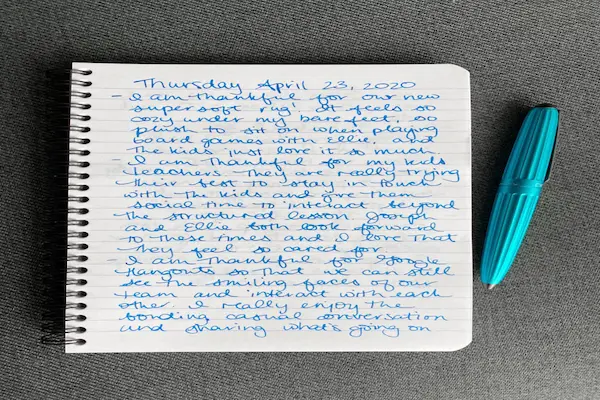
Exploring why gratitude matters helps you understand why this deceptively simple practice can gradually shift your mindset in powerful ways, because focusing intentionally on what is going well trains the brain to scan for positives rather than automatically searching for stressors or potential problems, a pattern the human mind tends to default to for survival reasons.
Daily gratitude practices also improve resilience, helping you recover more quickly from stressful situations by creating emotional balance that does not ignore challenges but instead balances them with acknowledgment of resources, support, moments of inspiration or sources of meaning that already exist in your life.
Gratitude journaling also supports mood regulation because consistently writing down positive moments encourages deeper emotional processing, which reduces mental clutter, interrupts rumination and reminds you — gently and consistently — that your life contains more goodness than your busy brain may notice on its own.
Before You Begin: A Warm and Realistic Gratitude Mindset
Beginning a gratitude journal becomes far smoother when you allow yourself to show up imperfectly, write imperfectly, and embrace the idea that gratitude does not need to feel dramatic or intensely emotional in order to be meaningful; in fact, maintaining a gentle mindset protects you from turning the practice into a performance or expecting instant transformation.
Mindset Principles for New Journalers
- Start small: tiny entries build consistency faster than long reflections.
- Honesty over perfection: gratitude is about noticing, not impressing.
- No guilt: skipping days is normal; you can resume anytime.
- Realistic expectations: gratitude lifts mood gradually, not overnight.
- Flexibility: practice can be written, spoken or mentally noted.
What You Need to Start a Gratitude Journal
Beginning a gratitude journal requires almost nothing, which makes the practice accessible for people who want a positivity habit without spending money or investing in elaborate supplies.
Basic Supplies
- A notebook (any size, any style).
- Pen or pencil you enjoy using.
- Optional: sticky notes for quick entries.
- Optional: digital notes app if handwriting feels difficult.
Environment Considerations
- Choose a spot where you can write without pressure.
- Write during transitions (morning coffee, lunch break, bedtime).
- Keep your notebook visible so you remember to use it.
How to Start Gratitude Journaling: A Step-by-Step Guide
This step-by-step approach makes gratitude journaling feel extremely simple, even for people who have never written consistently before or who worry they will “run out” of things to be grateful for.
Step 1: Choose When You Will Write
- Morning gratitude: sets a positive tone for the day.
- Evening gratitude: helps you process and unwind.
- Midday gratitude: offers a mental reset during stressful hours.
Step 2: Decide How Many Things to Write
- One thing per day: perfect for beginners.
- Three things per day: most popular structure.
- Five things per day: ideal for deeper reflection.
Step 3: Write Briefly
Long entries are not required; brief, simple statements create powerful results because clarity and frequency matter more than volume.
Step 4: Add Emotional Context (Optional)
Adding a short explanation of why something matters strengthens your mindset shift, helping your brain encode the gratitude more fully.
Step 5: Revisit Past Entries
Looking back on previous gratitude notes boosts motivation and reinforces your sense of growth.
30 Daily Gratitude Prompts to Inspire Your Journaling
Using prompts helps you avoid the “I don’t know what to write” barrier, especially when your mind feels overwhelmed; these thirty prompts support positivity, reflection, grounding and emotional clarity.
Gratitude Prompts List
- Write about one small moment today that made you exhale with relief.
- Name something in your home that brings you comfort.
- Describe a person you appreciate and why.
- Recall something kind you said to yourself recently.
- Write about a tiny pleasure you often overlook.
- Identify a challenge that helped you grow.
- List three things your body did for you today.
- Write about a sound, smell or taste you enjoy.
- Note something that made you smile this week.
- Describe a moment when you felt supported.
- Write about someone you miss in a grateful way.
- List simple tools that make your life easier.
- Describe the weather in a way that feels grateful.
- Notice a part of your routine that works well.
- Recall a memory that warms your heart.
- Write about a decision that helped you recently.
- List three things you are learning to appreciate.
- Describe something you once wished for that you now have.
- Write about a moment of rest you enjoyed.
- Notice a kind gesture you witnessed or received.
- Identify a source of inspiration in your life.
- Describe one thing you love about mornings or evenings.
- List three things you appreciate about your personality.
- Write about something in nature that impresses you.
- Note a problem that resolved itself recently.
- Write about something stable you can rely on.
- Describe a small joy from today.
- List three comforts that make life easier.
- Write about one person who shaped who you are.
- Describe a moment when you felt peaceful.
Simple Examples to Help Beginners Start Writing
Seeing examples helps new journalers understand how brief gratitude entries can be while still offering emotional benefit, which reduces the fear of not “writing well enough.”
Short Examples
- “I’m grateful for my warm blanket because it helped me calm down before bed.”
- “I appreciate the sunlight coming through my window today; it made the morning feel gentle.”
- “I’m grateful for the message from my friend because it reminded me I’m not alone.”
- “I’m thankful for having enough food in my kitchen this week.”
- “I appreciate that I remembered to take a break at lunchtime.”
Habit Stacking Tips to Build a Daily Gratitude Habit
Habit stacking works because linking a new behavior to an existing routine reduces friction and increases consistency without demanding willpower, making gratitude journaling easier to integrate into your life.
Habit Stacking Ideas
- Write one gratitude note right after brushing your teeth.
- Journal while drinking your morning coffee or tea.
- Write three gratitudes before opening your laptop.
- Do an evening gratitude entry before turning off lights.
- Record one gratitude note while waiting for water to boil or microwave to finish.
Micro-Habit Versions
- Write one sentence per day.
- Use a sticky note instead of a full page.
- Record a short gratitude voice note if writing feels overwhelming.
- Mentally note three grateful thoughts during your commute.
Optional Gratitude Journal Templates
Templates make journaling faster and remove decision fatigue, especially for people who want a minimalist structure that keeps the practice simple and focused.
Template 1: Classic Three-Line Format
- Today I’m grateful for:
- One thing that lifted my mood:
- One thing I appreciate about myself:
Template 2: Morning Reset
- Something I look forward to today:
- One support I can rely on:
- One intention for my mindset:
Template 3: Evening Reflection
- A moment I want to remember:
- A comfort I’m thankful for:
- A challenge I handled better than I expected:
Template 4: Weekly Gratitude Summary
- Three highlights from the week:
- One emotion I appreciated:
- Something I want more of next week:
Research Snippets: Why Gratitude Works
These research-based insights — written in simple language — help new journalers understand why gratitude journaling supports mindset shift, emotional resilience and overall well-being, without overloading you with scientific jargon.
Key Findings Summarized Clearly
- Gratitude strengthens your ability to notice small rewards in daily life.
- Feeling grateful lowers stress by shifting attention away from threat scanning.
- Gratitude increases emotional resilience by highlighting available resources.
- Consistent gratitude writing improves sleep by reducing rumination.
- Positive memory recall increases when people practice gratitude daily.
Troubleshooting: What to Do If Gratitude Journaling Feels Hard
Struggling with gratitude journaling is normal because the mind often defaults to focusing on stress or worry; using gentle troubleshooting tips helps you overcome this resistance while keeping the practice light and supportive.
Common Challenges and Helpful Solutions
- Challenge: “I can’t think of anything.”
Solution: Focus on neutral or small things — warmth, comfort, food, moments of rest. - Challenge: “It feels repetitive.”
Solution: Add a “why it matters” sentence for depth. - Challenge: “I forget to journal.”
Solution: Pair journaling with another routine through habit stacking. - Challenge: “My days are stressful.”
Solution: Write gratitude for strengths, lessons or small acts of endurance. - Challenge: “I feel silly writing basics.”
Solution: Remember that simple gratitude has the strongest impact on mindset.
Final Checklist for How to Start Gratitude Journaling
This checklist summarizes the most important habits and ideas so you can begin your gratitude journal with ease and clarity.
- Choose a simple notebook or digital space.
- Pick a consistent time of day to write.
- Start with 1–3 gratitude notes daily.
- Use prompts when you feel stuck.
- Stack your habit with an existing routine.
- Keep entries brief and honest.
- Add emotional context for deeper impact.
- Use templates to simplify journaling.
- Revisit past entries to reinforce progress.
- Show yourself grace when you miss days.