
Starting a walking plan for beginners becomes far more comfortable, encouraging and sustainable when the process is explained with calm guidance, long and gentle explanations, and realistic expectations built specifically for someone who has lived a mainly sedentary lifestyle and has just been cleared for light activity, because walking, although simple, requires your body to reengage muscles, joints and breathing patterns that may have stayed dormant for a long time, and beginning too fast or without structure can easily create discomfort or discouragement that interrupts your progress prematurely.
Many beginners feel pressured to walk long distances, match the speed of more experienced walkers or adhere to unrealistic step targets, and this pressure frequently produces tension, fatigue and frustration, especially when the early stages of physical activity should feel inviting, gradual and confidence-building rather than overwhelming or punishing. By approaching your routine through a gentle walking plan for beginners, you protect your joints, build cardiovascular comfort slowly and reduce the risk of injury, all while establishing a habit you can return to day after day with ease.
This expanded guide provides a deeply detailed, highly supportive and safety-first roadmap designed not only to teach you how to walk consistently but to help you understand what your body needs during the early stages of movement, offering warm-up instructions, cool-down routines, step-goal suggestions, shoe guidance, pacing strategies, mental techniques for motivation, an extensive four-week schedule, optional variations for different comfort levels, tips for walking indoors or outdoors, weather adjustments, posture reminders, and a progress log that helps you track improvements even when they seem subtle. Each section was created with the goal of making your beginner walking plan feel achievable, realistic and emotionally encouraging.
Why a Gentle Walking Plan for Beginners Matters
Walking is widely known as one of the most accessible forms of movement, yet beginning a routine without guidance can be surprisingly difficult. Many adults have spent years sitting for long periods, developing stiffness in hips, ankles and lower back, reduced cardiovascular endurance and inconsistent sleep patterns that influence energy levels. A structured walking plan, especially one designed for beginners, gives you a predictable path forward that avoids overwhelming your body while still helping you build endurance and confidence.
A thoughtful beginner walking plan prevents common pitfalls such as walking too quickly, choosing distances that feel manageable initially but exhausting later, or ignoring early signs of fatigue. By following a schedule that progresses week by week, you establish a strong foundation for physical conditioning, allowing your muscles, joints and breathing to respond positively rather than resisting the change.
Additionally, the psychological benefits of walking regularly begin appearing quickly: improved mood, reduced stress, clearer thinking, steadier energy and stronger motivation to engage in other healthy behaviors. When a walking routine becomes part of your identity rather than a temporary challenge, maintaining it becomes far easier.
Warm-Up Routine to Protect Your Joints
Because walking involves repetitive motion, preparing your body with a simple warm-up reduces joint stiffness and improves your stride. A few minutes of warm-up movements can dramatically change how comfortable your walk feels, especially if you spend long hours seated before your walk.
Effective Warm-Up Movements (3–6 Minutes)
- Slow marching in place: lift knees gently and swing arms loosely to stimulate circulation.
- Heel-to-toe rocking: shift weight from heels to toes to warm ankles.
- Gentle torso rotations: release tension stored in the lower back.
- Side steps with light arm movement: widen hip activation.
- Neck and shoulder mobility: reduce upper-body tension that can affect posture.
Performing these movements gradually increases flexibility and reduces early-walk discomfort, making your first few minutes far more pleasant.
Calm Cool-Down Routine After Walking
Cooling down signals to your nervous system that the activity phase has ended, helping your heart rate settle and releasing tension from muscles that may have tightened during your walk. This practice prevents sudden transitions from exercise to inactivity, which can feel jarring for beginners and sometimes cause light-headedness.
Gentle Cool-Down (3–7 Minutes)
- Slow stroll: 1–2 minutes at reduced pace.
- Calf stretch: relieve tightness from repeated stepping.
- Hamstring stretch: hold 20–30 seconds each side.
- Quadriceps stretch: improve knee comfort post-walk.
- Deep belly breathing: calm the system and support recovery.
Selecting Comfortable Shoes
Choosing comfortable shoes is one of the most essential elements of a walking plan for beginners, because proper footwear prevents knee tension, blistering, arch discomfort and ankle instability. When your shoes feel supportive, walking feels smoother and more motivating, and you are more likely to stick with your routine for the long term.
Key Features of Beginner-Friendly Walking Shoes
- Moderate cushioning: supports the heel and reduces impact.
- Breathable upper: keeps feet cool and prevents moisture buildup.
- Flexible sole: encourages natural walking gait.
- Stable heel counter: prevents wobbling or sliding.
- Toe-room comfort: essential for long-term comfort and preventing friction.
Shoe Fit Checklist
- You can wiggle your toes freely.
- Your heel does not lift excessively during steps.
- No pressure points appear after 10 minutes of wearing.
- The shoe bends where your foot naturally bends.
Realistic Step Goals for Sedentary Beginners
Step goals guide your progress without generating pressure. Instead of chasing the widely promoted 10,000-step target, beginners benefit from smaller increments that make walking feel manageable and enjoyable.
Gentle Step Goal Tiers
- Tier 1: 2,500–3,000 steps per day during week 1.
- Tier 2: 3,500–4,500 steps during week 2.
- Tier 3: 5,000–6,000 steps during week 3.
- Tier 4: 6,500–7,500 steps during week 4.
If these numbers feel too high or too low, adjust them freely — the purpose is to support, not pressure.
Walking Plan for Beginners: Full Four-Week Schedule
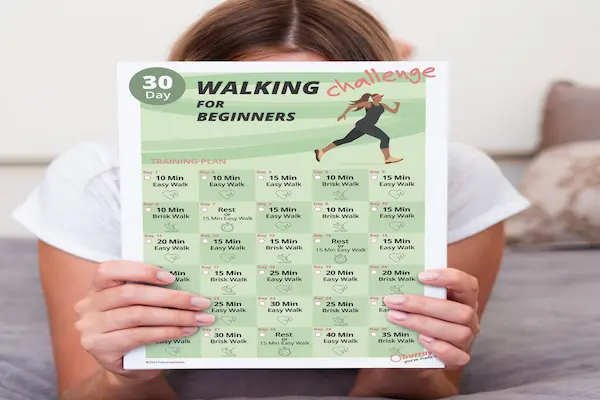
This four-week beginner walking plan progresses gradually, emphasizing comfort and simplicity. Every session includes warm-up and cool-down time, although the listed minutes refer specifically to the walking portion.
Week 1 — Building the Habit
The focus is not distance or intensity, but simply showing up and allowing your body to adjust. Consistency matters far more than speed.
- Monday: 10 minutes at an easy pace.
- Tuesday: 10 minutes maintaining relaxed breathing.
- Wednesday: Rest with optional stretching.
- Thursday: 12 minutes.
- Friday: 10 minutes easy.
- Saturday: 12–15 minutes.
- Sunday: Rest.
Focus on posture, breathing and comfort, and allow your body to ease into the movement.
Week 2 — Gradual Extension
The second week extends sessions slightly, giving you a sense of progress without overwhelming your endurance.
- Monday: 12 minutes.
- Tuesday: 15 minutes.
- Wednesday: Rest or gentle stretching.
- Thursday: 15 minutes.
- Friday: Optional 10-minute walk.
- Saturday: 18 minutes.
- Sunday: Rest.
Week 3 — Growing Confidence
This week increases time to help improve stamina while remaining beginner-friendly.
- Monday: 15 minutes.
- Tuesday: 18 minutes.
- Wednesday: Rest.
- Thursday: 20 minutes.
- Friday: Optional light stretching or short recovery walk.
- Saturday: 22 minutes.
- Sunday: Rest.
Week 4 — Comfortable Challenge
The final structured week gently challenges your endurance but remains accessible.
- Monday: 18 minutes.
- Tuesday: 20 minutes.
- Wednesday: Rest.
- Thursday: 22 minutes.
- Friday: Optional 15-minute walk.
- Saturday: 25 minutes.
- Sunday: Rest.
After this week, you can repeat the plan, increase time gradually, introduce small inclines or simply maintain the routine until it feels second nature.
Optional Variations for Comfort Levels
Because every beginner starts from a different place, you may adjust the walking plan based on your comfort, physical ability and preferences.
Variation A — Ultra-Gentle Start
- Start with 5–7-minute walks.
- Take rest days every other day.
- Add only 1–2 minutes per session per week.
Variation B — Faster Adaptors
- Begin with 12–15 minutes.
- Add a second short session on two days of the week.
- Increase step goals by 500 each week.
Walking Indoors vs. Walking Outdoors
Both options support your walking plan for beginners, yet each offers different advantages and challenges.
Indoor Walking Tips
- Use hallways, living rooms or indoor tracks.
- Maintain steady posture with smaller, controlled steps.
- Add light music to maintain rhythm.
Outdoor Walking Tips
- Choose flat routes for beginner mobility.
- Check weather before heading out.
- Use shaded paths on sunny days.
- Avoid uneven terrain until you build stability.
Weather Adjustment Strategies
Outdoor walking requires preparation for seasonal changes, and using safe adjustments ensures your plan remains enjoyable year-round.
Hot Weather Adjustments
- Walk earlier in the morning or later in the evening.
- Wear breathable clothing.
- Shorten sessions slightly if needed.
Cold Weather Adjustments
- Wear layers that can be removed gradually.
- Use gloves and a light hat to maintain warmth.
- Warm up for 1–2 extra minutes indoors.
Posture and Form Tips for Safer Walking
- Keep shoulders relaxed and down.
- Look ahead instead of at your feet.
- Maintain a light arm swing.
- Engage core gently for stability.
- Keep steps light rather than stomping.
Motivation Strategies That Support Consistency
Staying motivated during your walking plan for beginners becomes easier when you incorporate supportive routines, gentle self-talk and environmental cues that make each session feel inviting instead of forced.
Helpful Motivation Techniques
- Create a pre-walk ritual like putting on your shoes at the same time each day.
- Use countdown minutes rather than distance.
- Celebrate consistency weekly rather than daily.
- Pair walks with calming playlists or nature sounds.
- Remember that slow progress remains real progress.
Progress Log for Tracking Improvements
Tracking your progress creates evidence of growth even when small improvements are hard to notice day by day, making your journey clearer and more motivating.
- Week: ______________________________________
- Minutes walked: _____________________________
- Days walked: ________________________________
- Energy before: ______________________________
- Energy after: _______________________________
- Notes: _____________________________________
Signs You’re Progressing Well
- Improved breathing during walks.
- Feeling more energized after sessions.
- Reduced stiffness after long sitting periods.
- Better mood and mental clarity.
- Greater desire to keep walking.
Signs You Should Slow Down
- Sharp pain that does not fade.
- Dizziness or chest discomfort.
- Prolonged fatigue beyond one day.
- Increasing soreness with each session.
Frequently Asked Questions
Do I need special equipment?
No, comfortable shoes and lightweight clothing are enough for beginners.
Should I walk every day?
You may if you feel comfortable, but rest days are part of a healthy beginner walking plan.
What if weather is unpredictable?
You can walk indoors, shorten sessions or break them into multiple small walks.
When should I increase pace?
After four weeks of comfortable walking, you may add small bursts of faster walking.
What if I lose motivation?
Review your progress log and use gentle reminders of how far you’ve come.
Final Checklist for Beginners
- Perform a warm-up before every walk.
- Wear comfortable, supportive shoes.
- Follow the four-week walking schedule at your pace.
- Increase time slowly and intentionally.
- Use step goals as gentle guidance, not pressure.
- Cool down after each session.
- Track your progress weekly.
- Adjust for weather and energy levels.
- Stay compassionate with yourself.