
Learning how to create a family chore chart that is fair, visual, age-appropriate and easy for everyone in the household to follow becomes significantly more achievable when you understand that the real purpose of a chore system is not simply distributing tasks, but building responsibility, encouraging teamwork, reducing parental overwhelm and helping children of all ages grow in independence through daily routines that make sense for the entire family.
Many households fall into patterns where one or two people end up doing most chores, not because others are unwilling, but because responsibilities are unclear, tasks remain invisible until they become overwhelming or routines are inconsistent, making chore participation feel confusing rather than collaborative; fortunately, designing a structured, visual routine chart can completely transform this dynamic into something balanced, predictable and motivating.
This article offers a complete, practical, positive and deeply structured guide showing how to create a family chore chart from scratch, including age-by-age chore ideas, rotation systems that keep responsibilities fair, easy motivation strategies for kids and teens, a printable-style layout you can recreate in any notebook or planner, and a family review routine that helps the system adapt smoothly as children grow or household schedules change.
By the end, you will have everything needed to build a routine chart that supports family chores, clarifies each person’s responsibilities, keeps everyone accountable in a cooperative way and helps your home function with less stress and more teamwork.
Create a Family Chore Chart: Why Families Benefit From a Visual System
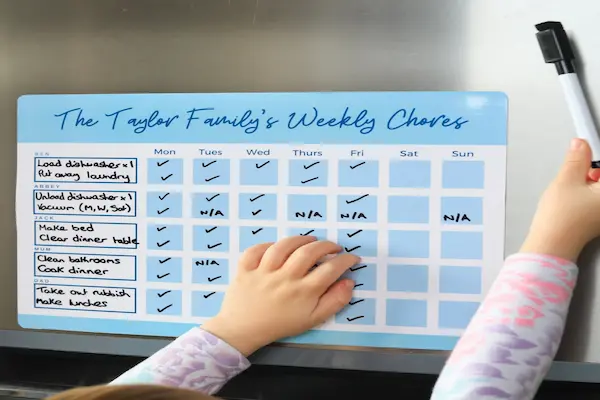
Families benefit from visual chore charts because children, teens and even adults respond better to information that is displayed clearly, consistently and predictably, allowing everyone to see what needs to be done instead of relying on repeated verbal reminders that drain energy and create frustration.
Chore charts reduce arguments because tasks are not assigned in the moment but decided in advance, making responsibilities feel fairer and avoiding the sense that chores are punishment or last-minute demands; instead, they become shared family duties that promote cooperation rather than conflict.
Visual routine charts also help younger kids understand expectations without needing reading skills, since simple icons or color-coded sections can communicate responsibilities instantly, while older children enjoy the satisfaction of checking off tasks and seeing their progress build across the week.
Tools You Need to Create a Family Chore Chart
Building a chore chart does not require expensive supplies because the strength of the system comes from clarity and consistency, not decoration, meaning that a very simple setup works perfectly when designed thoughtfully.
Basic Tools
- A notebook, whiteboard or poster board to act as the main chart surface.
- Colored markers for assigning zones or representing family members.
- Sticky notes for rotating chores without rewriting the entire chart.
- Ruler for clean lines to separate days and responsibilities.
- Small reward tokens or stickers for younger kids (optional).
Optional Enhancements
- Magnetic board with magnet labels for easy weekly swaps.
- Laminate sheets for reusable wipe-clean charts.
- Color-coded markers for each family member.
- Printed icons for children who cannot read yet.
Age-by-Age Ideas for Family Chores
Assigning chores based on age helps children feel capable rather than overwhelmed, since tasks match their developmental stage, coordination level, emotional maturity and physical ability.
Toddlers (Ages 2–4)
Very young children can contribute meaningfully when chores are framed as simple, playful actions, especially when tasks involve movement, sorting or imitation of what adults do.
- Put toys back into a basket.
- Place clothes into a hamper.
- Wipe small spills with a cloth.
- Help feed pets by pouring pre-measured food.
- Hand items to adults during cleanup.
Young Kids (Ages 5–7)
Children at this age enjoy clear, specific tasks with visible outcomes, making them ideal helpers for simple household routines.
- Make their bed with guidance.
- Sort laundry into lights and darks.
- Set the table with napkins and utensils.
- Water indoor plants.
- Organize their school backpack.
Older Kids (Ages 8–11)
Older children can handle more responsibility and usually enjoy routines with checklists or steps, as long as tasks remain achievable and not overwhelming.
- Fold laundry and put away clothes.
- Sweep floors in shared areas.
- Help wash dishes or load the dishwasher.
- Take out small trash bags.
- Prepare simple snacks.
Pre-teens and Teens (Ages 12+)
Teens can manage entire task sequences with minimal supervision, making this age group ideal for handling chores that require planning, consistency and independence.
- Clean bathrooms fully (sink, counter, mirror, toilet).
- Cook simple meals for the family.
- Mow lawn or help with outdoor chores.
- Vacuum all rooms once per week.
- Do laundry start-to-finish.
How to Create a Family Chore Chart Step by Step
Following a clear sequence ensures your chart is practical from day one, preventing confusion and making responsibilities easy to understand for every family member regardless of age.
Step-by-Step Creation Guide
- List all family chores that need to be done weekly or daily, without assigning them yet.
- Divide tasks into categories such as cleaning, kitchen duties, pet care, laundry, organization and outdoor work.
- Identify which tasks are age-appropriate based on the list above.
- Assign family members to chores using fairness and capability as your guide.
- Create the chart layout using columns for days of the week and rows for family members.
- Write one chore per slot or use sticky notes to keep assignments flexible.
- Explain the chart to the entire household so everyone understands expectations.
- Begin using the chart immediately and keep it in a visible location.
Choosing a Rotation System That Feels Fair
Rotation systems prevent boredom, resentment and arguments, ensuring that every family member shares both easy and difficult chores across the month rather than becoming stuck with the same tasks for too long.
Rotation Ideas
- Weekly rotation: Change responsibilities every Sunday.
- Task-type rotation: Rotate only the “hard” chores, while simple daily chores stay the same.
- Zone rotation: Assign rooms or areas instead of individual tasks.
- Points rotation: Each chore carries “points”; members rotate to balance totals.
- Sibling swap: Pairs of siblings switch tasks together for teamwork.
How to Keep Kids Motivated Without Stress
Maintaining motivation is easier when chore charts are presented as positive, collaborative systems rather than authoritative lists of demands, since children respond best to encouragement, autonomy and small rewards tied to consistent effort rather than perfection.
Motivation Ideas for Younger Children
- Use stickers as small visual rewards for completed tasks.
- Offer colorful markers for checking off boxes.
- Create mini-celebrations when a full week is completed.
- Allow children to choose one chore per week.
- Use simple icons that make the chart fun to look at.
Motivation Strategies for Older Kids and Teens
- Allow earned privileges like choosing a movie or dessert.
- Use point-based systems for bonus rewards (not monetary unless desired).
- Give teens autonomy over when they complete tasks as long as deadlines are met.
- Offer skill-building chores that feel meaningful rather than repetitive.
- Encourage goal-setting tied to consistency rather than speed.
Printable-Style Chore Chart Layout
The following layout can be recreated on paper, a whiteboard or a notebook, functioning as a printable routine chart that supports family chores clearly and visually.
Weekly Chart Structure
- Top row: Days of the week (Sun–Sat).
- Left column: Names of all family members.
- Center grid: One blank box per person per day.
- Bottom row: Reward or progress notes for the week.
- Side section: Space for monthly rotation notes or special responsibilities.
10 Sample Chore Assignments for Balanced Homes
These examples show how you might distribute tasks across household members to maintain fairness while ensuring that children handle age-appropriate responsibilities.
Example Set 1
- Parent A – Laundry cycle, kitchen cleanup, weekly floors.
- Parent B – Outdoor tasks, trash, meal prep.
- Child 1 (age 7) – Set table, tidy toys, water plants.
- Child 2 (age 12) – Load dishwasher, sweep, clean bathroom sink.
Example Set 2
- Parent A – Grocery sorting, bills, vacuuming.
- Parent B – Bathroom cleaning, cooking, pet care.
- Teen – Laundry folding, trash, hallway vacuum.
- Child – Feeding pet, daily room tidy, bring laundry basket.
Family Review Routine to Keep the Chart Effective
Reviewing your family chore chart regularly prevents the system from becoming outdated or unfair, allowing you to adjust responsibilities based on age, schedules, seasons and evolving household needs.
Weekly Review
- Ask each child how they felt about the week’s chores.
- Discuss any incomplete tasks without blame, focusing on solutions.
- Rotate roles if using a weekly system.
- Celebrate wins to maintain motivation.
Monthly Review
- Evaluate whether tasks remain age-appropriate as kids grow.
- Adjust time-sensitive responsibilities around sports or school seasons.
- Check whether siblings feel chores are fair.
- Review whether rewards still feel motivating.
Quarterly Review
- Update chart design if needed for readability.
- Introduce new responsibilities for older children.
- Remove tasks that no longer apply to your household.
- Refresh the reward system to maintain excitement.
Final Checklist for Creating a Family Chore Chart
This final checklist ensures your chore system stays structured, fair, clear and enjoyable for everyone in the household.
- List all chores and divide them into categories.
- Assign age-appropriate responsibilities for each child.
- Create the weekly chart layout using a visual grid.
- Choose a rotation method that prevents burnout and boredom.
- Use a positive tone when introducing the chart to kids.
- Select motivation strategies that match each age group.
- Keep the chart in a visible location where everyone passes daily.
- Hold weekly and monthly reviews to keep the system fresh.
- Encourage teamwork by celebrating completed chores together.
- Adapt the system regularly as children grow and routines change.