
Creating a calm, functional, and inspiring creative space becomes infinitely easier when you learn to organize craft supplies efficiently, because once every tool, material and tiny object has an intentional home, your hobby stops feeling like a constant search-and-rescue mission and finally becomes a peaceful activity where your time is spent making rather than looking for lost items.
Many hobbyists naturally accumulate mountains of paper scraps, yarn bundles, beads, threads, fabric pieces, paint tubes, glue sticks, markers, tools and unfinished projects, and although this collection brings joy, it can also scatter across every corner of the workspace, making it difficult to begin a project without first wading through clutter, which drains energy before creativity even begins.
This comprehensive guide will walk you through a practical, calm and deeply structured system designed specifically for people who want to find their craft items fast without needing a complicated setup, offering a step-by-step method based on zoning, decluttering, labeling, categorizing, and maintaining your storage so that you can always locate what you need in seconds.
Throughout this guide, you will learn how to create a simple inventory sheet, map zones for different craft categories, choose bins and boxes suitable for various materials, build an intuitive labeling system, apply decluttering strategies, maintain your system with weekly routines, and adopt budget-friendly options that match the realities of a home workshop without requiring expensive organizers.
Organize Craft Supplies Efficiently: Why a Clear System Matters
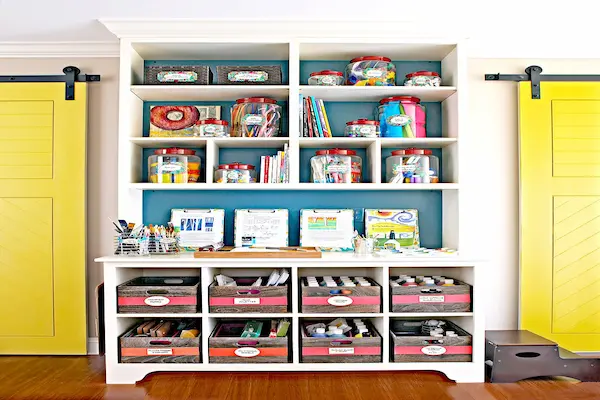
A messy craft space often steals motivation because the visual noise of scattered materials disrupts focus, and when your mind associates crafting with the stress of searching for missing scissors or trying to remember where the good markers went, you begin to avoid creative time even though the activity itself brings joy, connection and mental relief.
Establishing a thoughtful organizational system becomes powerful precisely because it removes friction, allowing you to transition effortlessly from idea to action, and the smoother this transition becomes, the more frequently you create, experiment and finish projects without wasting energy on cleanup or preparation.
A structured craft area also prevents duplicate purchases since you can clearly see what you already own, which not only saves money but also reduces clutter growth, making your workspace a reliable environment rather than a chaotic one where items disappear and reappear unpredictably.
Starting With a Craft Inventory Sheet
One of the most effective and overlooked steps in organizing craft supplies efficiently is building an inventory sheet that captures everything you own in broad categories, serving as a simple reference that reduces overwhelm and helps you make smarter decisions about storage, decluttering and future purchases.
How to Create Your Inventory Sheet
- Gather all craft items from drawers, shelves, bags, bins, closets and work surfaces into one central area.
- Sort items roughly by category such as fabric, paint, paper, yarn, tools, adhesives and embellishments.
- List each category on a sheet of paper or a notebook divided into sections.
- Record approximate quantities or descriptions like “8 sets of acrylic paint,” “4 bins of fabric scraps,” or “3 jars of buttons.”
- Leave space under each category to add new purchases or note items that run low over time.
Completing this sheet provides immediate clarity, making the rest of the organization process feel grounded and realistic instead of chaotic or confusing.
Decluttering Essentials Before Organizing
Before arranging supplies into zones, it helps to declutter your materials so that you only store what you genuinely use, because organizing clutter simply moves the problem around rather than solving it, and clearing out unnecessary items instantly makes your storage decisions simpler and more intuitive.
What to Declutter First
- Old paints that have dried, separated or thickened beyond repair.
- Paper scraps too small to serve any practical purpose.
- Broken tools such as dull scissors, bent needles or dried glue sticks.
- Duplicate supplies you will not realistically use before they expire.
- Leftover project pieces from hobbies you no longer pursue.
Questions to Ask While Decluttering
- Will I actually use this within the next six months?
- Does this material still function properly?
- Am I keeping this out of guilt rather than purpose?
- Does this item suit my current crafting interests?
The goal is not minimalism; the goal is usability, ensuring that anything remaining supports your creativity and can be accessed without frustration.
Mapping Craft Zones in Your Workspace
Once decluttering is complete, you can build an efficient system by dividing your workspace into zones based on how often you use different categories of supplies, which creates a natural flow where the items you reach for frequently are close at hand while less-used materials get stored farther away.
How to Map Zones
- Identify your most frequently used categories such as scissors, markers, adhesive tools, rulers, fabric pieces or yarn.
- Designate a “Prime Zone” within arm’s reach of your workspace for top-use items.
- Assign a “Secondary Zone” slightly farther away for items used weekly or monthly.
- Reserve a “Long-Term Zone” for seasonal or bulky supplies that are accessed rarely.
- Label each zone mentally or on paper before setting up bins and boxes.
This zoning method ensures that when you sit down to start a project, you avoid unnecessary digging, bending or searching, keeping your workflow smooth and enjoyable.
Choosing Bins and Boxes for Each Category
Selecting the right storage containers is essential because the shape, size and translucency of bins determine how quickly you can identify and retrieve supplies, and using inappropriate containers often causes clutter to reappear despite your best organizational efforts.
Types of Storage That Work Well
- Clear bins: allow instant visibility of contents, reducing guesswork.
- Stackable containers: maximize vertical space while maintaining order.
- Drawer units: ideal for paper crafting supplies, beads or small tools.
- Open baskets: perfect for yarn, fabric bundles or textile supplies.
- Divided organizers: helpful for buttons, charms, sewing tools or embellishments.
Budget-Friendly Alternatives
- Reused food jars for beads, buttons and tiny objects.
- Shoe boxes covered with decorative paper to store medium-size items.
- Cans or mugs for pens, crochet hooks, paint brushes and scissors.
- Cardboard trays for sorting fabrics or storing half-finished projects.
- Old kitchen containers repurposed into supply bins.
Because the goal is practicality, not perfection, choosing affordable, sturdy options works just as well as buying matched, expensive storage systems.
Building a Clear and Intuitive Labeling System
Labels make any organizational system stronger, since the moment you add readable tags, you eliminate hesitation about where to store or find something, allowing even a clutter-prone hobbyist to stay consistent with very little mental effort.
Labeling Methods
- Printed labels: clean and readable for long-term storage.
- Handwritten labels: fast to create and easy to update.
- Color-coded labels: connect storage categories to specific hues.
- Numbered labels: useful for inventory sheets that reference bin numbers.
Labeling Tips for Maximum Efficiency
- Use large lettering that is readable from across the room.
- Label both the front and top of containers so you can recognize them from different angles.
- Include sublabels inside drawer units to prevent mixing categories.
- Keep extra blank labels nearby for quick adjustments.
As your collection grows or shifts, updating labels becomes a natural part of maintaining your system rather than a chore.
Creating a Step-by-Step Workflow for Easy Access
Organizing craft supplies efficiently becomes far easier when you define a practical workflow, because knowing how to retrieve, use and return each item guides your actions during busy crafting sessions, preventing chaos from building up again.
Simple Workflow Example
- Start with a clean table or crafting surface.
- Select your project and pull only the materials needed into a small staging tray.
- Work on your project while keeping tools within your prime zone.
- Return unused supplies immediately to labeled bins or drawers.
- Place ongoing project pieces in a dedicated “In Progress” bin.
Repeating this gentle routine makes cleanup automatic and prevents clutter from accumulating ever again.
Craft Storage Ideas Tailored to Different Hobbies
Every crafter uses different materials, so customizing your storage according to your hobby ensures your system fits naturally into your creative process rather than forcing you to adapt to a generic layout that may not make sense for your specific craft.
For Sewing and Fabric Crafts
- Store fabric vertically like files to see patterns instantly.
- Use clear bins for thread spools sorted by color family.
- Keep scissors, measuring tape and seam rippers in a divided drawer.
For Yarn and Fiber Arts
- Organize yarn by weight such as worsted, bulky or fine.
- Use open baskets to avoid yarn compression.
- Create a hook-and-needle caddy for fast access to sizes.
For Paper Crafts and Scrapbooking
- Sort paper by size and color in vertical magazine holders.
- Use shallow boxes for stickers, stamps and embellishments.
- Assign a small drawer to adhesives like glue sticks and tape.
For Painting and Drawing
- Store paint tubes clipped upright in small baskets.
- Place brushes in weighted jars to prevent tipping.
- Keep palettes, palettes knives and mixing tools in a tool tray.
Budget-Friendly Craft Storage Options
Organizing your craft supplies does not require a large financial investment because thoughtful creativity can turn everyday household items into effective storage solutions that make your workspace functional without straining your budget.
Low-Cost Storage Ideas
- Reuse cardboard boxes as drawer dividers for tools and embellishments.
- Turn leftover food containers into paintbrush holders.
- Repurpose magazine files for fabric scraps or paper collections.
- Create DIY pegboards using inexpensive perforated hardboard.
- Organize random small items in ice cube trays or muffin tins.
These simple solutions offer structure and visibility without requiring specialized craft storage products.
Maintenance Checklist to Keep Your System Working
Maintaining an organized craft space becomes effortless when you follow a weekly routine that reinforces habits gently, preventing clutter accumulation and keeping your workspace ready for creativity at any moment.
Weekly Maintenance Checklist
- Return stray supplies to their labeled bins or drawers.
- Empty your “In Progress” bin of abandoned project pieces.
- Restock frequently used materials like glue, thread or markers.
- Review your inventory sheet and add updated quantities.
- Vacuum or wipe down your crafting surface to remove dust.
Monthly Maintenance Checklist
- Reevaluate zones to ensure frequently accessed supplies remain in prime areas.
- Declutter scraps, dried materials or damaged tools.
- Rewrite faded labels or reorganize color-coded bins.
- Rotate seasonal supplies to front or back depending on the month.
- Check for duplicates and remove extras before they accumulate.
These small routines prevent your system from collapsing over time, keeping everything smooth and intuitive.
Final Checklist for Your Complete Craft Organization System
Before you begin crafting in your newly organized space, reviewing a final list ensures your environment is ready, functional and supportive of fast access and joyful creativity.
- Verify that every bin, box and drawer aligns with its labeled category.
- Check that your zones make sense based on frequency of use.
- Make sure your inventory sheet is filled out clearly.
- Confirm that your decluttered items are fully removed from the workspace.
- Reassess if any category needs a clearer label or container.
- Store your most frequently used tools within arm’s reach.
- Keep your budget-friendly storage options sturdy and accessible.
- Rearrange any items that still feel out of place.